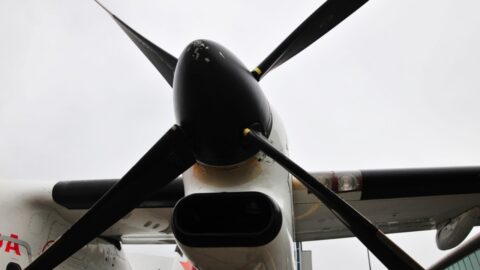
A liquid hydrogen propulsion system for aviation has been successfully tested by AeroDelft, a non-profit organisation led by Delft students. This makes the team the first student team in the world to develop, build and test an electric propulsion system for aircraft using liquid hydrogen as fuel.
The successful test was conducted at a TNO liquid hydrogen test site in Ypenburg, The Hague. This is an important step in the team's mission to prove and promote liquid hydrogen as a viable and sustainable alternative to conventional aviation fuels.
A team of more than 60 students
Founded in 2018, AeroDelft consists of more than 60 students from different backgrounds and nationalities. As a non-profit student team, AeroDelft is working to make aviation more sustainable through hydrogen technology.
Since 2018, AeroDelft has been working on Project Phoenix, a project to develop a pilot-controlled electric aircraft powered by liquid hydrogen. The Full-Scale Phoenix is a Sling 4 monoplane with a maximum take-off weight of 920 kg and a wingspan of 10 metres.
The team is developing both the Prototype Phoenix and the Full-Scale Phoenix. Currently, the full-scale propulsion system is being tested with gaseous hydrogen, while the team is conducting parallel tests with liquid hydrogen on the scaled-down prototype. The team aims to fly the manned Full-Scale Phoenix on gaseous hydrogen for the first time this year. A test flight on liquid hydrogen is scheduled for 2026.
Unique challenges
Working with liquid hydrogen poses unique technical and logistical challenges. Namely, it has to be stored at -253°C, then reheated to room temperature before use. The hydrogen is then combined with oxygen in a fuel cell, which generates electricity and emits only water. This process combines the risks of cryogenic temperatures with the flammability and volatility of hydrogen gas.
To work with this, AeroDelft developed a vacuum-insulated tank and a custom-made electric heat exchanger that can handle a temperature difference of 300 °C, in collaboration with Cryoworld. The entire system can be remotely controlled, has special venting systems and built-in safety features.

Image: AeroDelft
It was integrated in collaboration with TNO and liquid hydrogen supplier Air Products. Prior to testing with liquid hydrogen, the system was extensively tested with liquid nitrogen, gaseous helium and gaseous hydrogen.
A promising alternative
The team previously flew a battery-electric drone and conducted tests with gaseous hydrogen. While both technologies are sustainable and already widely used in road transport, they do not meet aviation performance standards. Liquid hydrogen, with its high energy density per mass and volume, offers a promising alternative, despite posing significant technical, logistical and safety challenges.
"Watching the propeller turn, powered by a liquid-hydrogen system we have been working on for years, was one of the most impressive moments of my life. All the pressures, all the late nights, came together in that one moment. It works and we made it possible together," says Davide Mangini, Chief of Liquid Hydrogen Propulsion.
First manned test flight
This successful test has made AeroDelft the first student team to operate an electric propulsion system on liquid hydrogen. It speaks of an important step towards sustainable aviation. The team will now analyse the data collected, further develop the system at full scale and continue preparations for the first manned test flight of their liquid hydrogen-powered electric aircraft.
"This test shows what is possible when students are fully committed to a mission they believe in. Everyone on this team shares the passion for sustainable aviation. They are now among the most experienced students in the world in working with hydrogen and are taking this experience into their further careers, and we are extremely proud of that," says Wadeke Tieleman, Team Manager