
Microsoft and Pacific Northwest National Laboratory (PNNL) are deploying artificial intelligence (AI) to identify suitable raw materials for solid-state batteries, also known as solid-state batteries. The technology could help greatly accelerate battery development.
Solid-state batteries do not have a liquid, but a solid electrolyte. This allows for greater energy density and faster charging speed, among other things. Interesting for electric vehicles (EVs), among others; thus, development can increase range, shorten charging times and/or reduce battery pack size. Scientists are therefore enthusiastic about the potential of solid-state batteries.
Which raw materials?
A major concern when developing new batteries is the raw materials used for them. For instance, lithium is a widely used material. Although lithium can be found worldwide, demand significantly exceeds supply. It is therefore interesting to develop batteries that use other substances.
Microsoft last launched its Azure Quantum Elements (AQE). This platform combines high-performance computing and AI to make new discoveries in chemistry and materials science. Microsoft offered AQE to PNNL for identifying other materials for batteries. In this way, they aim to reduce the use of lithium.
From 32 million substances to 23 candidates
Using the Microsoft platform, a total of 32 million substances have been identified as candidates for this purpose. From this set, the AI system identified all stable substances, which totalled about 500,000. The selection was then refined further and further, including by running to simulations, mapping conductivity and weighing price and availability.
The process ultimately led to the identification of 23 candidates for the development of new batteries. Five of these materials have been known for some time, meaning that 18 new materials have been identified. The process took a total of around 80 hours, according to PNNL and Microsoft.
Degradation found to be minimal
Solid-state batteries have been the focus of considerable attention for some time now. PowerCo, founded by the Volkswagen Group, is also working on such batteries. And with success: research shows that solid-state batteries hardly degrade at all. During a test, one such battery was charged and discharged a total of 1,000 times. According to PowerCo, this is equivalent to travelling around 500,000 kilometres in an EV, depending on the model. After the test, the battery was found to retain 95 per cent of its original capacity.
Author: Wouter Hoeffnagel
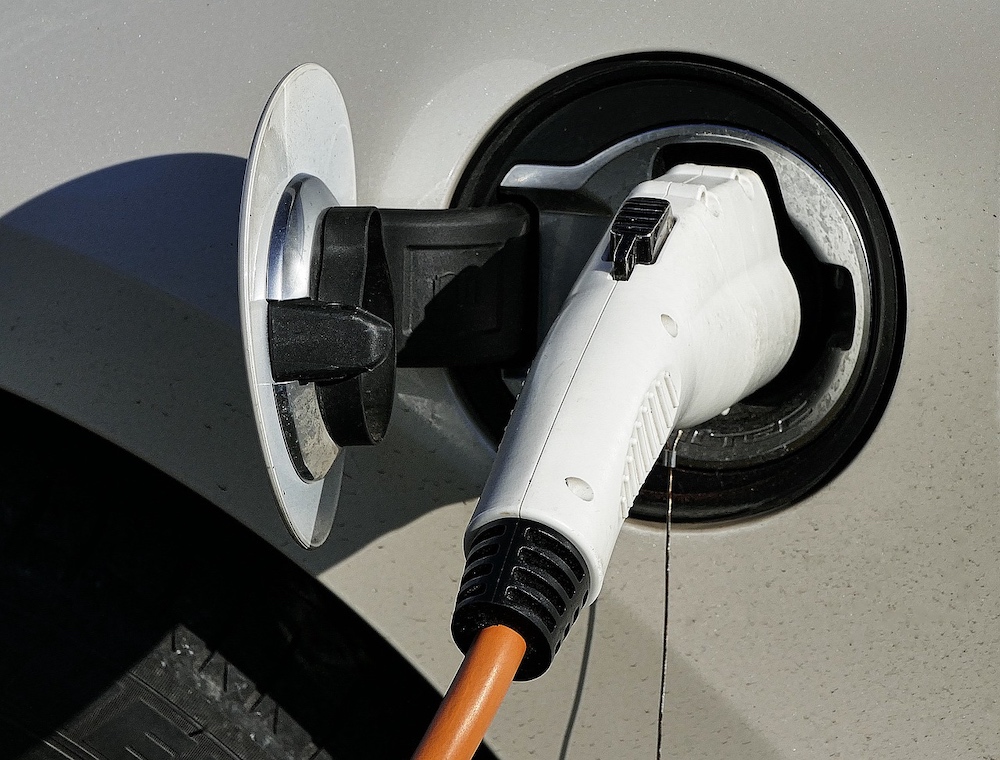
Photo: Wolfgang Eckert via Pixabay











