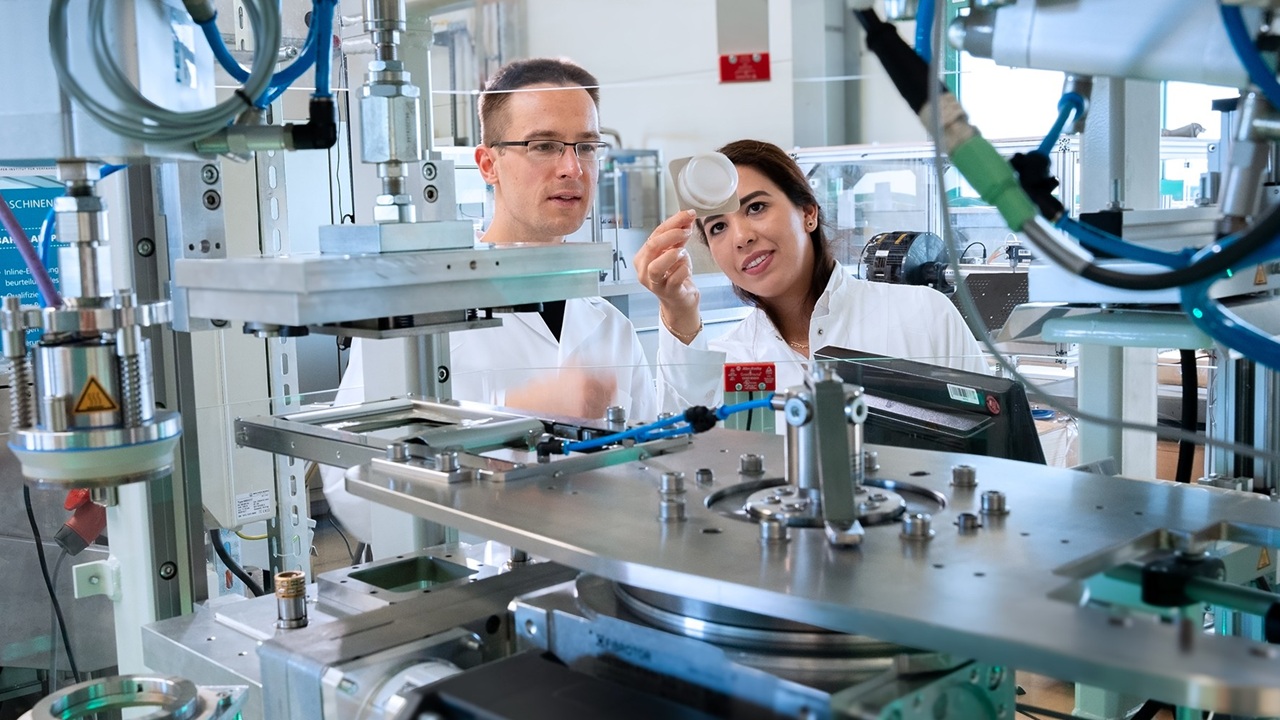

In the KIOptiPack innovation lab, researchers from the Fraunhofer Institute for Process Engineering and Packaging IVV are working with 51 partners from industry and the research sector to develop innovative AI-driven optimisation tools that could be a gamechanger for plastic packaging. The aim is to use AI tools to recycle plastic packaging in the future.
Wishes and requirements
Plastics are light, durable and easy to process, making them truly versatile materials for almost any application. It is therefore no surprise that many goods are packaged in plastic. The plastics industry's goal is to support the circular economy by using ideal packaging design (design for recycling), minimising environmental impact while providing optimal protection for packaged goods. Ideally, packaging should consist of as much recycled material as possible. New EU regulations also require plastic packaging to consist of at least 35 per cent recycled material by 2030.
Artificial intelligence and packaging
Together with their project partners, researchers from Fraunhofer IVV are using artificial intelligence as a "game changer" in recycling and for processing recycled material into packaging. The aim is to reduce plastic waste, create more sustainable packaging and reduce the demand for raw materials. To achieve this, Fraunhofer IVV researchers have developed AI-based optimisation tools and connected them via a data space.
Optimisation
This approach enables efficient consideration of the many requirements that plastic packaging has to meet. In particular, it also unlocks ways to recycle these packages and optimise them as a whole. Besides environmental friendliness and impact, aspects such as functionality, design, customer acceptance and producibility are also taken into account.
Packaging design
After all data are fully integrated, the AI tools suggest the best possible packaging designs for a given product, minimising material use. To do this, the data space brings together all digital data on material properties, origins and destinations and links the information together. In this way, it provides a shared infrastructure for exchanging data beyond the factory gates. The data model underpinning the entire package, which enables data sharing between different stakeholders, was also developed by Fraunhofer IVV.
To improve the integration of recycled materials into packaging solutions, a shared data space is crucialAndrea Büttner, institute director at Fraunhofer IVV.
Digitising material flows to protect consumers
"To improve the integration of recycled materials into packaging solutions, a shared data space is crucial," says Andrea Büttner, institute director at Fraunhofer IVV. "Recycled plastic is a valuable material. But the quality of the recyclable plastic has to be good. If the recycled material is contaminated with undesirable substances such as other types of plastics, printing ink or degradation products, this can seriously affect the quality and even render the material unusable. In principle, once plastics are recycled, they can contain contaminants."
Contaminants
These contaminants pose a particular challenge for the industry. This means that the entire industry, from producers of recycled materials and companies making packaging films to the food sector, needs to systematically share data, along with a single language for dealing with plastics. The materials in question are mainly polyolefins, which are the largest group of plastics and can change significantly during processing.
AI helps choose the right recycling method
"AI-driven tools are a must when it comes to high-quality recycling of plastic materials. The modular software solutions we are developing at Fraunhofer IVV help with aspects such as characterisation and analysis of material properties, and they connect different information flows in such a way that a suitable application area can be identified for recycled materials with fluctuating properties," says Matthias Reinelt, head of the Shelf Life and Packaging Modelling group at Fraunhofer IVV.
To measure is to know
"Our AI tool for packaging production uses as much information about the recycled material as possible to determine the optimal processing chain, so that, for example, a sustainably produced yoghurt cup with a homogeneous wall thickness and the desired shape ends up on shop shelves." The researchers also analyse the quality of the recycled materials using chromatography, which in turn also relies on AI tools for improved substance identification. The aim is to prevent unsuitable or contaminated recycled materials from entering the cycle, which can happen even with proper sorting.
Real-time suggestions
The AI-based optimisation tools and linked data space from Fraunhofer IVV and its project partners are in some cases integrated directly into manufacturers' production processes. This allows real-time suggestions for further processing, depending on the recycled materials used on the machines on site.
Source and opening photo: Fraunhofer IVV
Opening photo: IVV experts optimise a production process for packaging. As part of the KIOptiPack project, they are also developing AI tools to make plastic packaging suitable for the circular economy.
Read also: Sustainable packaging from swamp plants











