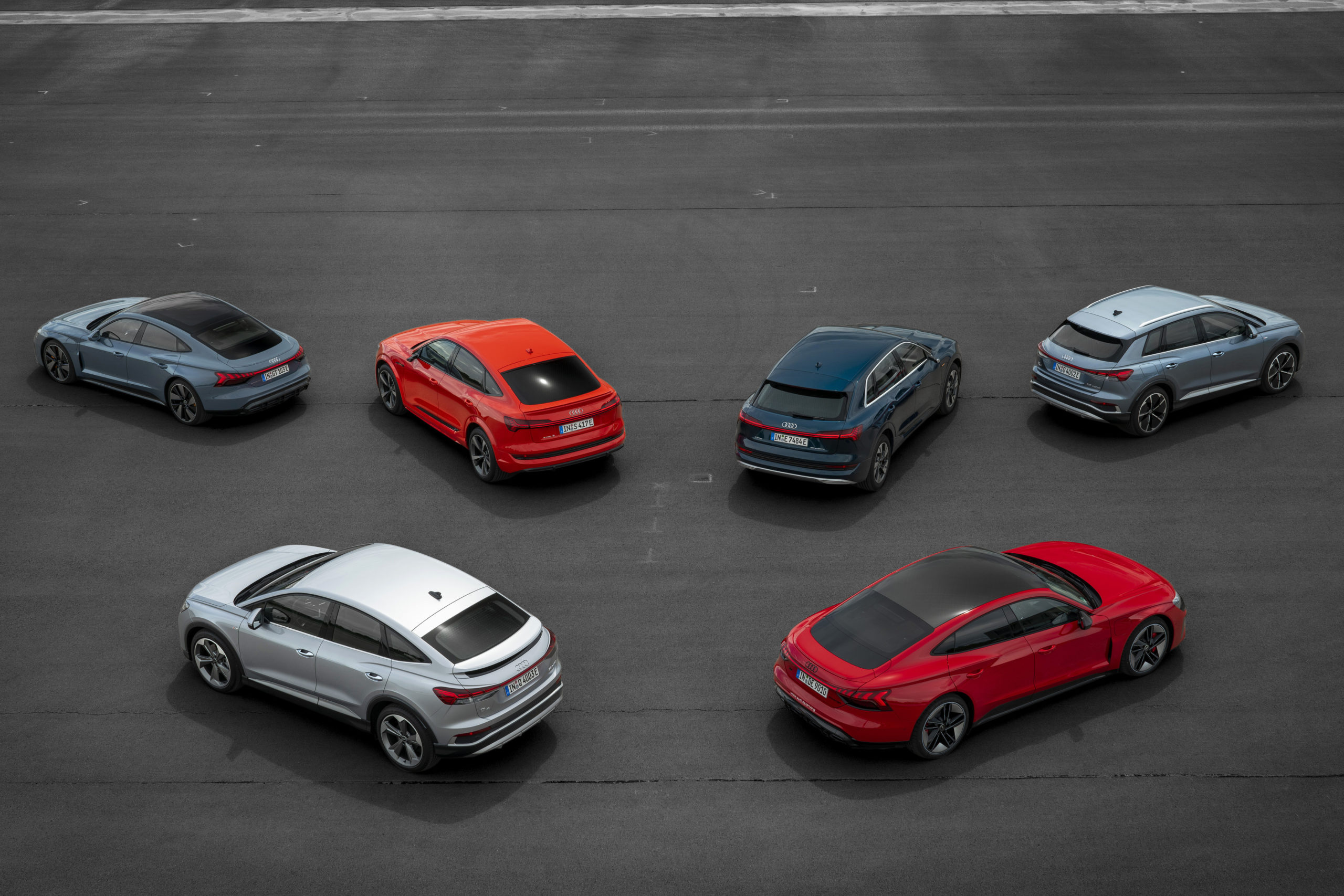

Audi sets clear goals for the future. For instance, the brand with the four rings aims to sell 50 per cent more cars by 2030 than today. It also wants to offer customers of electrically powered models a unique travel experience with its own ecosystem.
Audi also sets the goal of being a leader in technology. All this is set out in the new 'Vorsprung 2030' strategy. Earlier, the brand announced that it will introduce only electrically powered models from 2026 and that production of combustion engines will be phased out between now and 2033.
Clean technology
With the new 'Vorsprung 2030' strategy, Audi is setting a date for the full transition to electric mobility. In doing so, Audi is using the brand slogan 'Vorsprung door Techniek' to develop clean technologies to contribute to a sustainable future. At the same time, the German brand is committed to ensuring customers' freedom and individual mobility.
Mobility trends
To arrive at the new, future-oriented business strategy, some 500 Audi employees researched more than 600 global mobility trends that could become relevant for the company until 2030. For instance, sales and profits are becoming increasingly dependent on electrically powered models. At a later stage, autonomous driving offers additional growth potential in software and services.
New ecosystem
In addition to phasing out the combustion engine, Audi is betting on the distinctiveness of its electrically powered models. Quality, design and added value for customers are the key points here. A new ecosystem for electric and autonomous driving plays an important role in this.
Experience
'Vorsprung' then no longer just stands for technology and progressive design, but above all for an exceptional (digital) experience. This also involves infrastructure. In future, Audi customers will be able to upgrade their car with new features online, for example, and software updates can also be carried out online. To make this happen, CARIAD plays an important role. This flexible software platform with a standardised operating system and cloud connection will be available for all Volkswagen Group brands by 2025. It makes cars suitable for autonomous driving, for example.
Expansion in China
As before, China plays an important role in Audi's plans. The company expects the market for premium models here to grow to 4.5 million units in 2030 (3.1 million in 2021). Audi also expects the share of electrically powered models to grow from 10% now to 40% by the end of this decade. Therefore, the brand is further expanding operations in China. Audi has been producing cars in China for 30 years and as part of "In China, for China", the brand is going to produce even more models locally in the world's largest individual car market. Together with partner FAW, the company will expand the range of locally produced models to 12 this year. Audi is additionally working with SAIC in China. The first models to emerge from this collaboration are expected on the market in 2022.
So far, Audi has sold seven million cars in China. In 2020 alone, there were 727,385, and in the first half of 2021, the German premium brand sold 418,749 cars there.
Photo: Audi AG










