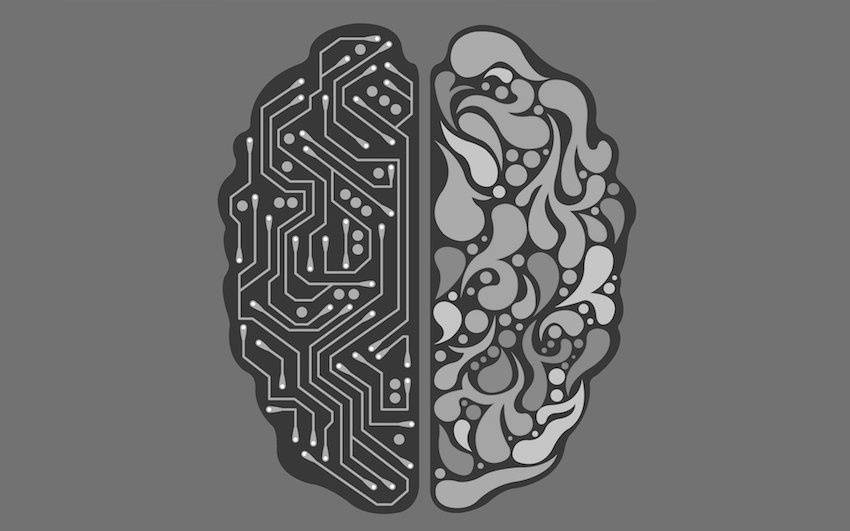

The deployment of Artificial Intelligence (AI) in the Netherlands continues unabated. AI has enormous potential, for example in the manufacturing industry, and is often even seen as a panacea. Companies hope to increase their added value with AI. Yet the deployment raises many questions among stakeholders. This is due to a lack of experience. There are also a lot of obstacles to implementation. The lack of or poorly accessible data also makes it more difficult for companies. A recent survey offers insights into the experiences of industrial companies that have already successfully implemented AI.
Reichelt elektronik has commissioned a survey regarding the implementation of Artificial Intelligence in companies. The figures were collected by international research firm OnePoll and included 1,650 technology decision-makers from industrial companies in Europe, including 250 from the Netherlands.
Expectations Artificial Intelligence
More than half of the respondents (56%) use Artificial Intelligence in the manufacturing environment. 38% of this group use AI across the board. 18% use it only partially. Remarkably, companies are much better at formulating their expectations of AI now than they were a few years ago. The most common reason (39%) for AI deployment is product development, followed by process optimisation at 35%. For more than a third (35%), quality control is important and 32% of respondents say they are introducing AI with a view to increasing productivity.
Overarching strategy needed
Artificial Intelligence offers opportunities to address issues in new ways. Yet the technology itself is rarely the solution companies are looking for. Application possibilities are still limited to specific areas. Precise tailoring to specific functions or specifications is needed. Many organisations lack a clear understanding of exactly what they can do with Artificial Intelligence. An overarching strategy, as opposed to separate pilot projects, offers a solution for this. 65% of respondents say they already have such an overarching strategy. About a third (31%) say they have only invested in AI sub-projects so far.
Artificial Intelligence projects successful?
Getting behind implementation requires confidence in the technology. Yet the computational methods by which Artificial Intelligence arrives at results are not always understood in detail. This lack of understanding puts some companies off. Meanwhile, this perception has improved somewhat as more cases and initiatives are improving transparency.
Different approach due to advancing insight
When asked whether companies that already implemented AI five years ago would have done so in the same way with today's knowledge, only just over half responded 'yes'. 29% would do some things differently now. 9% would even do everything differently than five years ago. Besides better planning and an overarching strategy, respondents indicated that they would involve their own staff more in the processes from the start. Involving people earlier would help them build more trust in the technology.
Artificial Intelligence standard in industry
Looking ahead, 80 per cent of respondents think it is realistic that robots will take over more and more tasks from humans. For a third of those surveyed, it is clear that AI will be the industry standard in four to six years' time.
Only one tool
It is important to realise, however, that AI is just one of many tools. Statistical calculations or vector models can be equally or perhaps more useful for machine learning. "It is mainly about deploying the technology that best suits a specific task. When using AI, it is important to be sure that the new technology fits seamlessly with the processes. And is not an additional process that runs parallel to existing processes," says Christian Reinwald, Head of Product Management & Marketing at reichelt elektronik.
Photo: Artificial intelligence (source image: Pixabay / Seanbatty)











