If flying cars and similar flying vehicles become commonplace, our cities will have to adapt. Anyone who ever watched the cartoon series ‘The Jetsons’ will be able to picture what that might look like. A study led by MVRDV and Airbus offers some interesting ideas.
Vertiports
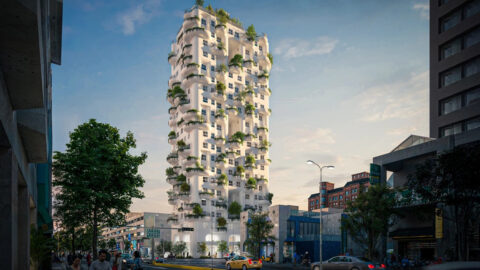
Dutch architecture firm MVRDV worked for two years with Airbus, Bauhaus Luftfahrt, ETH Zurich and Systra, to investigate how flying vehicles can be integrated into existing cities. The focus of the research is on so-called 'vertiports' - mini airports or landing points vertically scattered along the facade of a building. This allows you to 'hop' from balcony to balcony. The vertiports, which are possible in different styles and sizes, can double public amenities and could produce renewable energy, for example using solar panels.
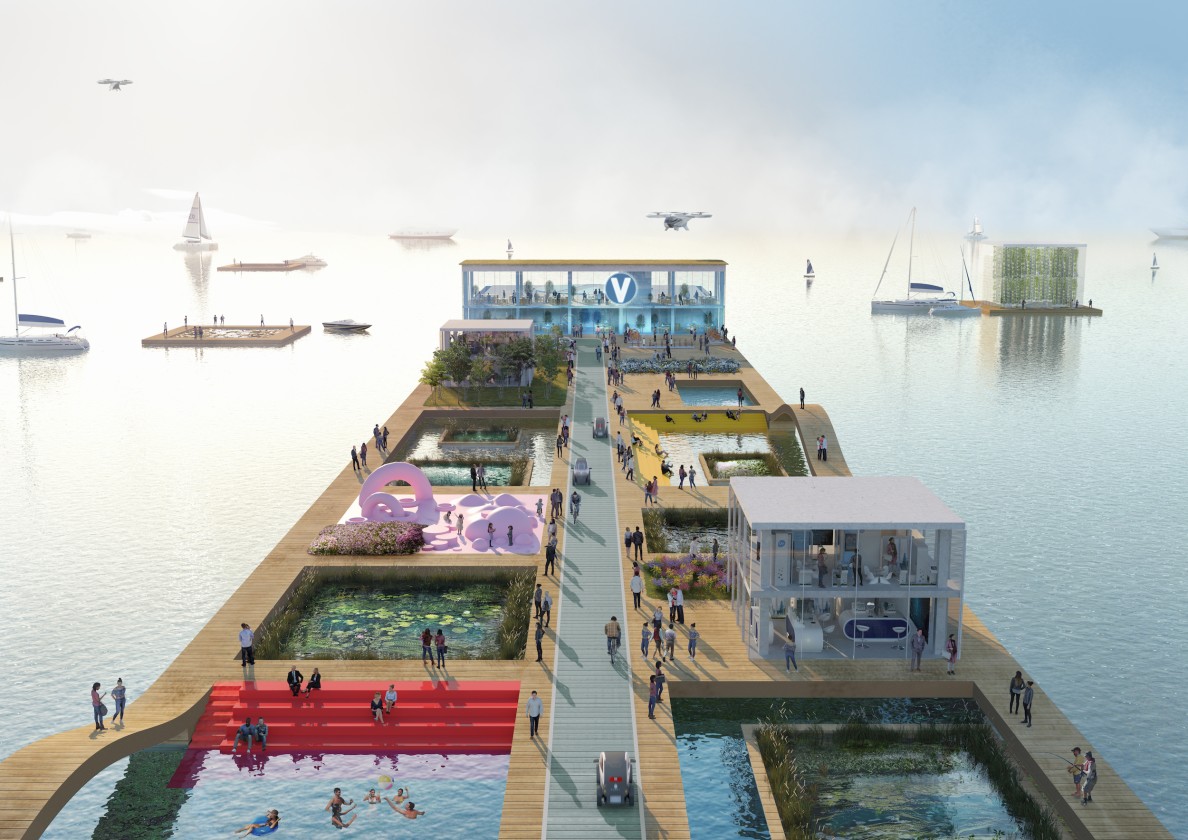
The study examined vertiports of various types and sizes. Unlike other urban transport options such as trains, metros or buses, the vertiport network does not require a linear infrastructure system. No tracks, tunnels or roads are required, thereby saving energy, natural resources and land. This enables designers to adapt the vertiports to a variety of locations.
Large cities
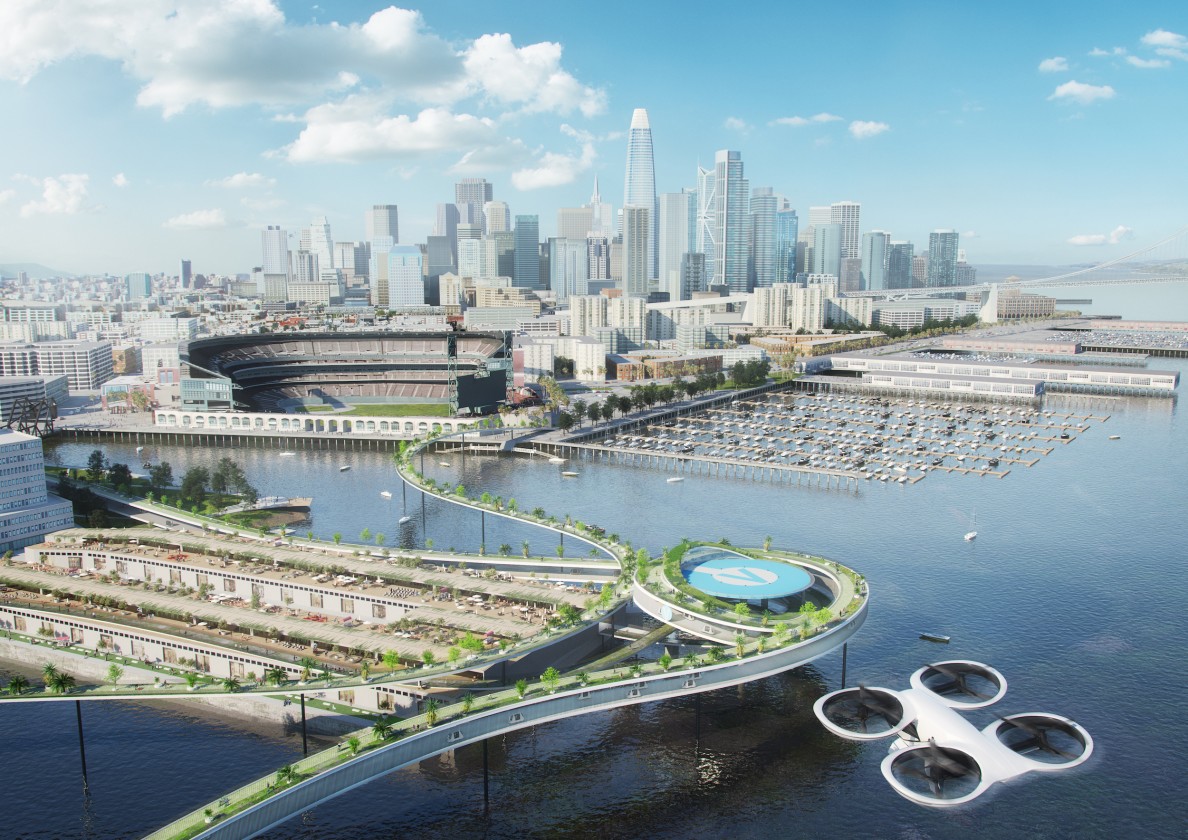
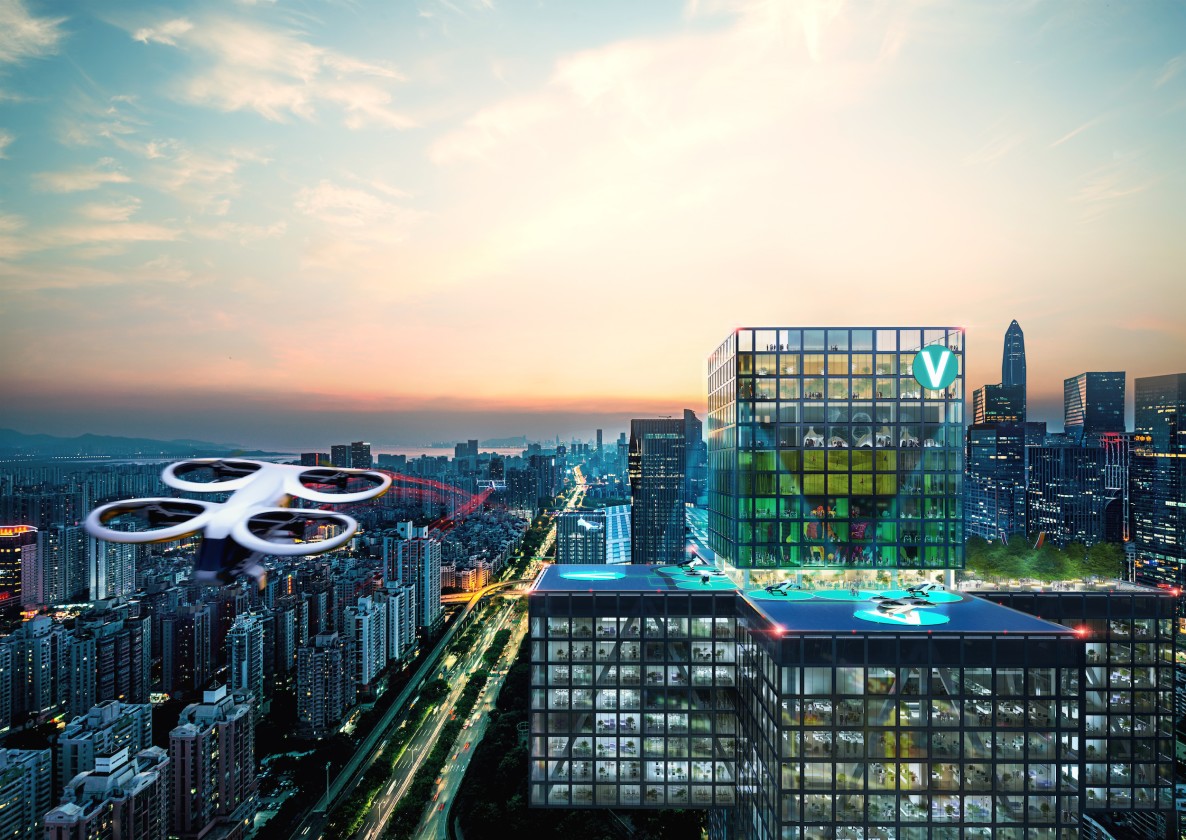
The idea is that vertiports will complement existing transport methods such as rail and road. MVRDV has pictured how these vertiports can be integrated into different cities. These examples include a green-covered version in São Paulo, Brazil, and another off the coast of San Francisco. Noteworthy is the idea for China's Shenzhen, where with drone-like vehicles used to travel from skyscraper to skyscraper without having to touch the ground.
It will be a while yet before we get there, though. But as cities become more densely populated and technologies improve, it is becoming increasingly clear that the ‘three-dimensional city’ – a city with flying vehicles – certainly looks set to be one of the urban models of the future. A city where your mobility begins even on the balcony.