Innovation often seems to revolve around ‘more’. More functions, more automation, more technology. Yet this development also presents a challenge. As systems become more complex, the number of interdependencies and technical choices increases.
The question then is: how do you manage complexity in such a way that systems technically meet requirements and specifications, whilst remaining reliable and flexible? For it is precisely this that forms the basis for future-proof technology.
Complexity as a logical consequence of innovation
A future-proof system is not necessarily one that is perfectly designed today. It is a system that can adapt to the changes of tomorrow. Consider new regulations, changing customer requirements or higher performance standards.
Virtually every technical development or new functionality required for this adds a new layer to a system. Integrating these elements makes systems increasingly sophisticated. This is particularly evident in sectors such as mechanical engineering, the automotive industry and industrial automation. Whereas systems used to consist of just a few separate components, nowadays dozens or even hundreds of parts work together.
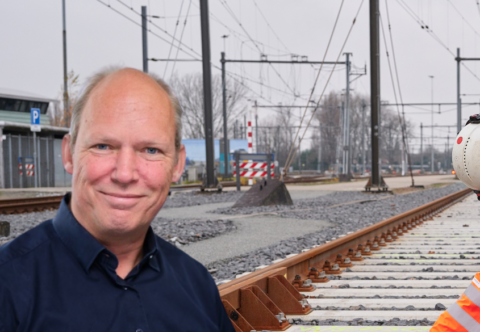
According to Ramon, an account manager at TT-Engineering and a former engineer, complexity often arises gradually in this context: “Functionalities and automation measures are piling up to form a system that is becoming increasingly difficult to grasp.” Complexity is therefore not a design flaw, but often a logical consequence of growth and innovation.
What you don’t organise becomes a risk
It is not the amount of technology that poses the greatest risk, but the lack of structure. When systems are developed further without a clear architecture, dependencies arise that are difficult to keep track of. A change to one component can have unexpected consequences for other parts of the system. Faults are more difficult to analyse, and system extensions require ever more time and effort.
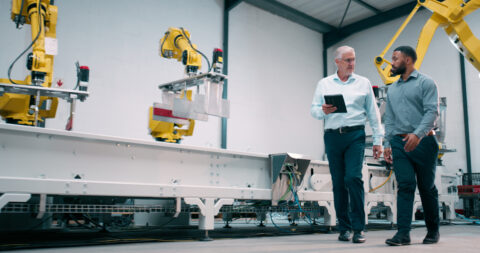
An example of this is an automated production line in which, over the years, more and more components have been interconnected. As these interdependencies increase, it becomes more difficult to implement changes without affecting the system as a whole. The result is not necessarily more breakdowns, but a greater likelihood of maintenance issues, longer lead times and higher costs over the system’s lifetime.

System architecture as the basis for manageable complexity
As complexity is often unavoidable, the solution does not lie in simplifying every design. The challenge lies in making it manageable. This begins with a clear system architecture. By deliberately separating functions, building subsystems in a modular way and clearly defining their use, a system remains organised and predictable.
Standardisation also plays an important role in this regard. When components are designed, tested and integrated according to established principles, it becomes easier to adapt or expand systems without having to reassess the entire design.
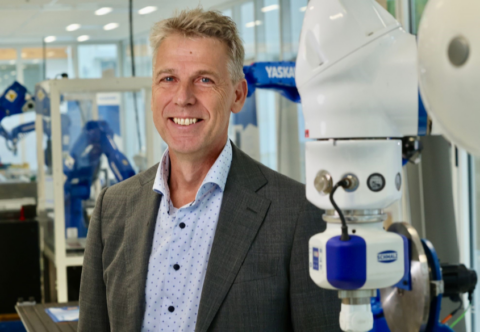
Ramon recognises that this approach is becoming increasingly important: “It is not just about designing systems, but about balancing all the factors that together determine complexity.” The key question therefore shifts from “how can we make this simpler?” to “how can we organise this more intelligently?”.
Why does manageable complexity lead to future-proof systems?
A well-structured system delivers benefits throughout its entire life cycle. By structuring components logically and keeping dependencies manageable, maintenance becomes simpler and future expansions remain more feasible. In addition, changes can be implemented more quickly because the impact on other system components is clearer.
Systems designed on the basis of manageable complexity:
- Are easier to maintain and manage;
- Can be expanded or adapted more easily;
- Minimising the impact of changes and disruptions;
- Are better able to cope with changing requirements and regulations;
- Contributing to lower costs over the entire lifespan of the system.
This not only results in a technically robust design, but also in a system that can evolve in line with future developments.
Don’t do less, but organise things more intelligently
Complexity is an inherent part of modern engineering. New technologies, higher expectations and changing markets simply demand sophisticated systems.
The question, therefore, is not how complexity can be avoided entirely, but how it can be organised in a deliberate manner. By paying attention to structure right from the design phase, a system is created that not only performs today, but also remains manageable tomorrow. Or, as it often boils down to in practice: don’t do less, but organise more intelligently.
Curious to find out how we translate complex technical challenges into manageable and future-proof solutions? TT-Engineering would be happy to work with you to find the right solution.