
Bone fractures that do not heal can be a huge burden for patients. They often lead to even more surgical procedures. This makes them a challenge for trauma surgery. Together with partners, Fraunhofer researchers have developed a composite material for use in the operating theatre. This should significantly improve treatment success and enable faster healing.
The material consists of a combination of a biodegradable polymer and bioactive glass serves as a guiding or supporting implant - called scaffold - to heal bone fractures faster. The aim is to inhibit the growth of bacteria at the wound site and promote the growth of new bone substance. The innovative medical technology was developed as part of the joint SCABAEGO project. This is funded by the German Federal Ministry of Education and Research (BMBF). The Fraunhofer Institute for Manufacturing Technology and Advanced Materials IFAM will show the first demonstration model at the COMPAMED medical technology fair in Düsseldorf.
Elegant and effective solution
The Fraunhofer IFAM in Bremen is now presenting an elegant and effective solution in the joint project SCABAEGO (Scaffold bio-active glass enhanced osteogenesis). The aim of the project is to test the working hypothesis that the use of bioactive materials during surgery supports the healing process and reduces the risk of infection. The Clinic for Trauma and Reconstructive Surgery at Heidelberg University Hospital and BellaSeno GmbH, a Leipzig-based medical technology specialist, are involved as partners.
Bone fractures under the microscope
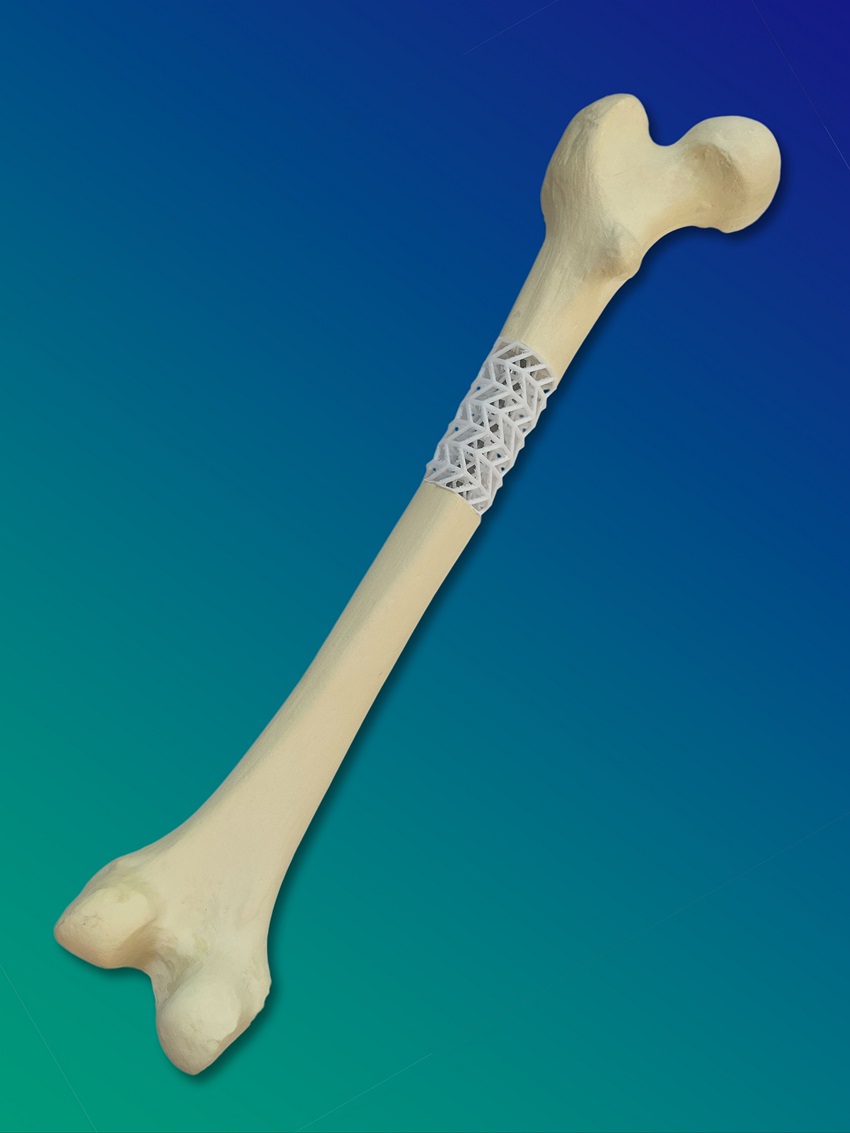
Researchers at Fraunhofer IFAM have developed a composite material consisting of the biodegradable polymer polycaprolactone (PCL) and bioactive glass. This composite is then used for 3D printing customised main and supporting structures for bone fractures, known as scaffolds. Prior to this, the structure of the damaged bone is mapped using computed tomography (CT). The custom-made structure replaces the missing part of the bone. The structure is then filled with bone marrow taken from the iliac crest or from larger long bones. This ensures that the biological bone replacement material remains securely in place and that the fracture site heals safely.
Lower risk of infections
The innovative medical device offers further benefits. "The bioactive glass in the scaffold raises the pH of the environment to the alkaline range. Next, we want to investigate the expected inhibition of bacterial growth," explains Dr Kai Borcherding. He is head of the Medical Technology and Life Sciences Business Unit at Fraunhofer IFAM. The researchers expect this to significantly reduce the risk of infections after surgery.
Bioactive composite material turns into bone
In addition, bioactive glass promotes the formation of new bone substance at the fracture site. This is because in contact with body fluids, the glass turns into hydroxyapatite, a chemical compound composed mainly of calcium phosphate, a substance close to bone. "Bioactive glass can address clinically relevant problems - inhibition of bacterial growth and effective support of bone healing. After six or seven years, the scaffold is also completely degraded or converted into bone substance," says trauma surgeon PD Dr Tobias Großner. He is chief physician and head of the Department of Experimental Trauma Surgery at Heidelberg University Hospital.
Not entirely new
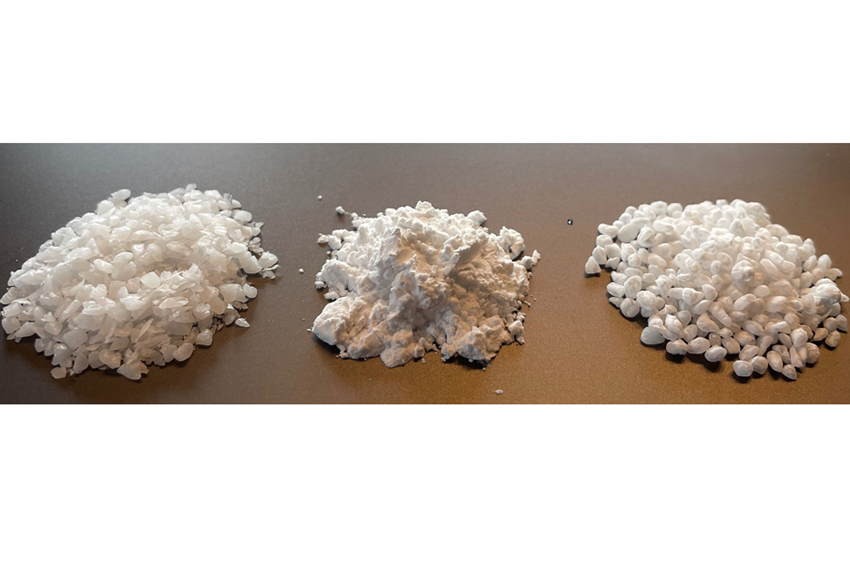
Bioactive glass is already used to treat bone defects. What is new, however, is the combination with PCL on an industrial scale. Fraunhofer researchers have succeeded in combining glass and PCL into a composite material that can be used directly in 3D manufacturing. This makes it possible to realise patient-specific 3D scaffolds in particular. The composite material can be produced quickly and easily on an industrial scale. "The PCL polymer is mixed with the glass granulate and a solvent and then processed in several steps. Finally, the solvent is removed by drying and the remaining composite is finely granulated," explains Borcherding.
New concept for uncomplicated healing
Compared to conventional procedures, the innovative composite material should enable significant advances in treatment. Previously, the fracture site was covered with bone cement during initial surgery. The human organism sees the cement as a foreign body and envelops it with new periosteum (Masquelet's membrane). This process takes up to two months. After that, the patient has to return to the operating theatre. There, the surgeon cuts open the periosteum, removes the cement, fills in autologous bone substance taken from another site and reattaches the periosteum. Until now, there were limited options to firmly anchor the soft bone substance to achieve undisturbed healing. In combination with a plate or nail, the scaffold provides the soft bone substance with the necessary support until the bone heals.
Opening photo: From PCL (left) to composite (right), filled with bioactive glass (centre). (Photo: Fraunhofer IFAM)










