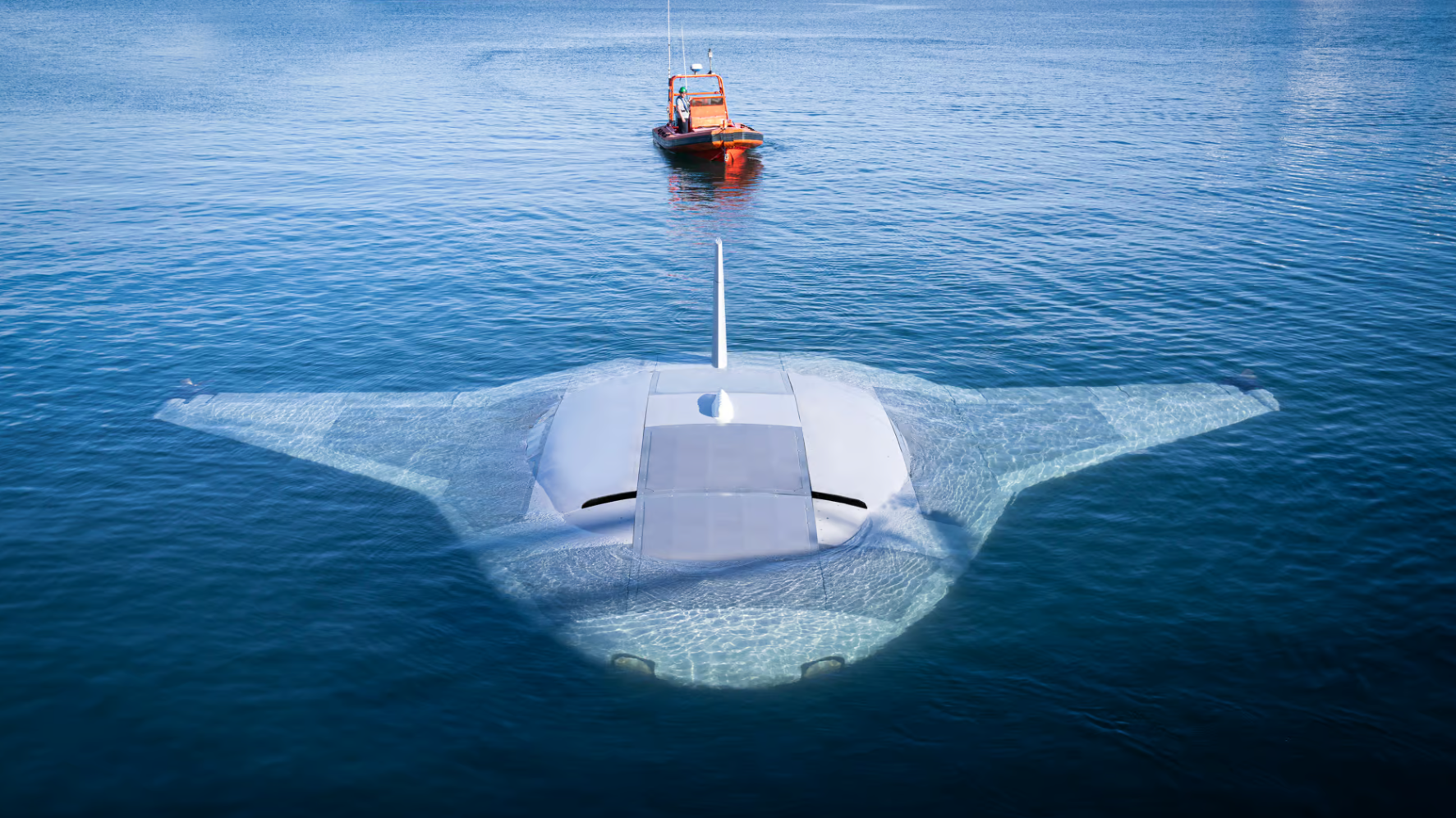

DARPA has finally revealed more about the mysterious robotic submarine Manta Ray (manta ray), with impressive new images of the prototype unmanned underwater vehicle (UUV) first tested off the coast of Southern California.
The Manta Ray is expected to star in a new class of long-range, long-life UUVs. The submarine, which somewhat resembles a steel ray, can be transported in parts to be assembled anywhere in the world.
Successful test
The Manta Ray is by no means small. The design is energy-efficient and features a hidden drive system in the stern. According to prime contractor Northrop Grumman, the Manta Ray has modular construction and energy-saving systems, including the ability to anchor itself to the seabed and put itself into hibernation mode. There are low-power submarine propulsion systems, new sensors for underwater detection and classification of threats and hazards, highly efficient navigation and control systems, and advanced methods to combat fouling and material degradation.
This first test period, which took place in February and March, focused on the Manta Ray's hydrodynamic performance underwater and the operation of its propulsion, steering, buoyancy, propellers and control surfaces. The tests also looked at the submarine's transportability: the Manta Ray was disassembled and packed into five standard shipping containers before being shipped from Northrop Grumman's Maryland plant to California.