Many people think that the aerospace industry in the Netherlands only provides employment for a select group of companies. After all, there isn’t really that much – or much more – to be done in this sector in our country, is there? Wrong! As for space exploration: a few years ago, we saw the exhibition ‘NASA – A Human Adventure’ at the Jaarbeurs. It featured a gallery set up specifically for Dutch companies – called ‘Dutch Dimensions’. What became clear there was that technologies and products, although developed for use in space, are finding their way into numerous other markets. From the medical sector to the sat-nav in your car, from food products to – almost as a matter of course – the aviation industry. And the aviation industry in the Netherlands is still just as vibrant as it was in Fokker’s heyday.
Knowledge-intensive sector
The industry is making considerable headway in our country, rattling firmly at the door of politics. This knowledge-intensive sector sees opportunities, but the long time-to-market and life cycle of the final product mean that many companies cannot play a significant role without support. That the sector has to meet extreme quality and reliability requirements seems logical. In addition, high-tech processes play a very big role in every element of the supply chain. From design, development, assembly, operation and maintenance to modification and repair. And all in an international setting. Challenges enough.
Long time-to-market
Because of all these characteristics, a supplier can expect first revenues as much as 7 to 10 years after the start of a development. The duration of a journey to the break-even point can be as long as 15 to 20 years. This makes alternative funding - and political support for it - vital. Internationally, the space industry lives around 85 % on (national) public procurement. But not in Europe. Here, the industry only runs at just over 50% on public procurement. Space projects from both ESA - European Space Agency - and commercial parties - telecoms - are pre-eminently large, high-risk, long-term projects, with a very long development period.
Politics
In mid-February, the Netherlands Aerospace Foundation organised a debate between members of parliament and the business community to get their hands on investment in the sector. The politicians present underlined the great economic value of both sectors. Remco Dijkstra of the VVD: "The government can be a launching customer and act as an ambassador." That the sector is important not only economically but also socially was another conclusion. Kees Verhoeven of D66: "Space wrongly has a 'distant' feeling for many people, while its impact is actually very close."

The debate also concluded that the sector can play a role in solving major climate issues. Not only actively, but also passively. For example, active is fighting forest fires and monitoring dykes using satellite images, passive is making aircraft greener and quieter. The extremely long payback periods in the sector can be tackled with government support though, with companies looking for credit opportunities appropriate to these circumstances, rather than subsidies. At the same time, it is argued that every investment euro provides a return of 5 to 6 euros. A revolving fund has been mentioned as a possible solution. Good cooperation between government, knowledge institution and companies is an important condition for cashing in on the opportunities.
Added value
How much turnover is now made in that aerospace sector? Dutch aerospace ranks 6th among European countries with a turnover of almost €4 billion and employs over 16,500 people from some 100 companies and knowledge institutions. The Dutch aerospace sector has an annual turnover of €140 million with 4,000 direct employees.
According to the NSO - Netherlands Space Office: our own space organisation - the economic benefits are broader. There is an important cross-fertilisation between the space sector and other economic sectors. These include material use, robotisation, certain working methods, miniaturisation, solar cells and so on. But the societal benefits and also the scientific benefits again reach much further.
The Netherlands has managed to secure a top international scientific position in a number of knowledge domains. This opens doors to other scientific fields and knowledge, which would not have been there without the investments in these sectors. In addition, scientific knowledge, 'human capital', leads to highly educated personnel, which also adds value in other sectors. Moreover, Dutch space contributes to the popularity of science studies.
With the bankruptcy of Fokker, it was feared that specialist knowledge would be lost. But twenty years later, employment is as high as ever. And TU Delft's aerospace faculty has never been as thriving as it is today, as have the higher education courses in aviation.

Supply
The aerospace industry in the Netherlands comprises a large number of companies and knowledge institutions, which are linked together as a chain. This chain consists of: airlines, airports with supplying companies, air traffic control, aerospace industry, suppliers to aircraft, spacecraft and engine manufacturers, maintenance companies, knowledge institutions, universities, military and police aviation and the suppliers and users of satellite information. In total, the sector employs over 125,000 workers and directly contributes over two and a half per cent, €15 billion, to the Gross Domestic Product.
Stimulating the sector is therefore also important for the Top Sectors that are directly and indirectly involved in, or benefit from, developments in Dutch aerospace.
Growth
ING sees a good basis for further growth, even - or perhaps especially - with recent global developments. The exact impact is difficult to estimate. The Netherlands Aerospace Foundation indicates that the sector has performed one and a half times better than the international average in recent decades, with some 4-5 per cent annual growth.
In late 2016, the government agency Netherlands Space Office published an advisory document outlining the Netherlands' thought space policy for the years 2017 - 2019. The advisory concluded:
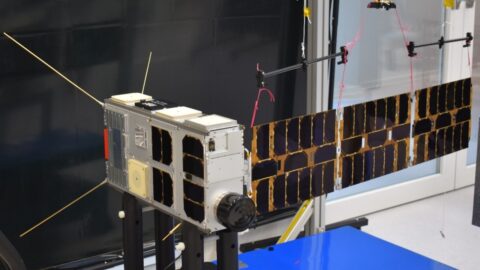
Dutch aerospace companies and institutes are excellently positioned to continue to play or build an important role globally. The Netherlands played a pioneering role right from the beginning of space exploration, especially from a science perspective. As a result, the current generation of space companies and institutes is building on a strong tradition. Technologically, the Netherlands is among the top in a number of areas. For instance, Dutch companies are suppliers of essential technologies for European satellites and launchers. The presence of ESTEC, knowledge institutes and (technical) universities makes the Netherlands fertile ground for the development of new and commercially interesting space technologies, such as nanosatellites, solar panels and various types of measuring instruments. Also in the field of satellite data applications, there is broad expertise in areas of use such as water, agriculture, climate and air quality, and an industry is growing in the Netherlands that organises itself under the cooperative NEVASCO that offers services worldwide.
A sector that is still, or perhaps more than ever, clearly distinctive.
> Download the brochure on aerospace in the Netherlands here
By: Janet Kooren
Photos: Pixabay / Janet Kooren