
Danish plans to realise an energy island in the North Sea have been delayed by at least three years. The island will not get there until 2036 at the earliest, announces Danish Minister of Climate and Energy Lars Aegaard.
Minister Aegaard reports to Danish business newspaper Borsen that the country may want to cooperate with Germany around the realisation of the energy island. The Danes hope to convince Germany to also invest in the project.
Hub for offshore wind farms
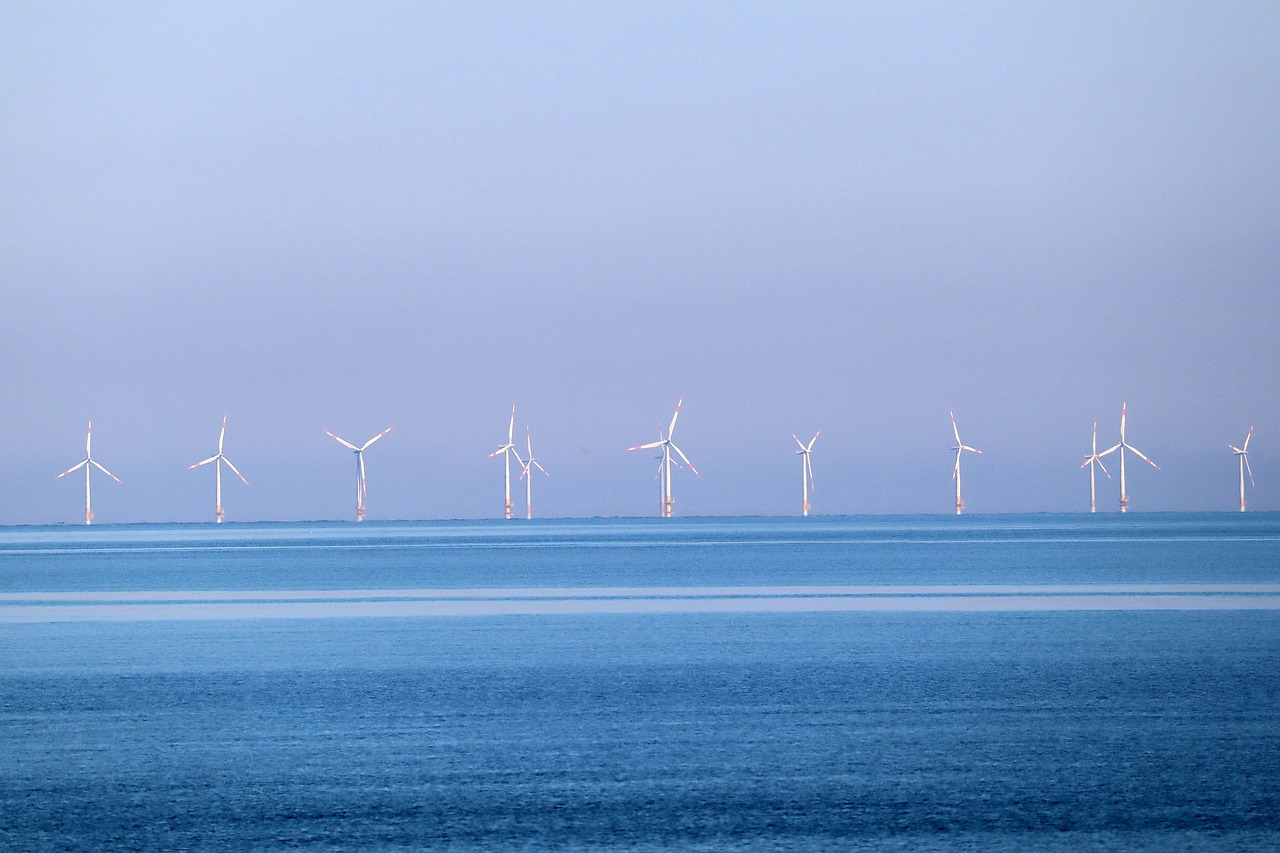
It involves islands that act as hubs for wind farms far out to sea. The hubs distribute energy generated by the wind farms to different countries. In this way, energy from locations where a lot of wind energy is available can be redirected to countries where, on the contrary, a lot of renewable energy is needed.
The Danes want to realise two such islands: one in the North Sea and one in the Baltic Sea. The energy island in the North Sea is to be located about 100 km off the coast of Thorsminde in Jutland, Denmark. It will house electrical facilities for routing electricity from wind turbines to the grid.
Up to 10GW of wind energy
A port and service facilities for 3 to 4GW of offshore wind farms may also be built. At a later stage, the Danes want to expand the island and associated wind farms to generate up to 10GW of wind power. The intention is to supply the energy not only to Denmark, but also to surrounding countries.
The plan for the energy islands dates back to 2020, when a broad majority of the Danish parliament voted in favour of its realisation. This is not the first time construction has been delayed. In mid-2023, the plans were put on hold to re-evaluate the island construction model. Now the construction of the island in the North Sea is again delayed.
Another delay
So now the plan is once again delayed. This time, concerns about the cost of the energy island prompted the project to be postponed. For instance, a key condition for the realisation of the project was that it would be carried out without subsidies.
The realisation of the island was originally a Danish-Belgian project. Minister Aegaard hopes that in addition to the Belgians, the Germans are also willing to invest in the energy island. In that case, the project will also be modified to connect Germany to the energy island, causing delays. Minister Aegaard reports to Borsten that this means the island cannot be realised until 2036 at the earliest. Germany's willingness to participate in financing the project would have a major impact on this.
Also plans in Belgium
Belgium is also working on Princess Elisabeth Island, which is set to become the world’s first artificial energy island. This island is intended to serve as a hub for connecting undersea high-voltage cables to the United Kingdom and Germany.
In addition, Copenhagen Infrastructure Partners, which invests a lot in renewable energy, previously announced plans to invest 150 million euros in an energy island, also to be located in the North Sea, in the coming decades. On the islands, it wants to realise wind turbines and produce green hydrogen using electrolysers.
North Sea Wind Power Hub
In the Netherlands, TenneT presented its vision for the North Sea Wind Power Hub as early as 2016. A consortium has also been set up to investigate the possibilities in this area, involving Danish and German parties. The partners involved are TenneT Netherlands, TenneT Germany, the Danish grid operator Energinet, Gasunie and the Port of Rotterdam Authority. A feasibility study at the time showed that the concept is technically and economically viable. The first hub is expected to be developed in the early 2030s.
Further information on the Danish energy islands in the North Sea and the Baltic Sea is available here.
Author: Wouter Hoeffnagel
Image: Pixabay











