To keep the planet livable for future generations, I do my best to keep my personal carbon footprint, and that of my household, as small as possible. Yet there is a wry irony: my work connects me precisely to sectors notorious for their high CO2 emissions. People sometimes call me on that too.
Take the manufacturing sector, which, according to a post by Prof. Dr. Ir. Jan Rotmans on LinkedIn, emits the most CO₂ of all sectors in the Netherlands. However, he added, this sector has also achieved a 43 per cent reduction in CO₂ emissions since 1990. An impressive achievement, but there is still a long way to go. After all, under the Paris Climate Agreement, the EU must be fully climate-neutral by 2050.
So the manufacturing industry faces huge challenges. It requires guts, rethinking and radical change. Just look at the government-wide programme 'The Netherlands Circular in 2050'. Our economy, and with it industry, must change to a sustainable, fully circular economy. This means that all links in the chain must work together. Products must have a long life, be repairable and reusable at the end of their life cycle. This also requires space and capacity to collect and process waste streams.
From the government and in the media, more attention could be paid to this major transition, as far as I am concerned. What choices are being made and why? What does this mean for us, both professionally and privately?
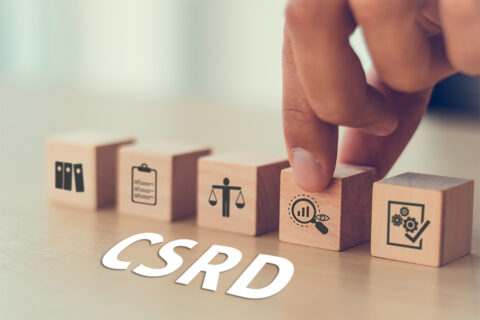
In line with the Corporate Sustainability Reporting Directive(CSRD), from 2024 onwards, an increasing number of companies will be required to report on the impact of their activities on people and the environment. This increases transparency and improves the quality of sustainability information. An additional benefit is that companies will begin to incorporate sustainability into their strategy.
For the manufacturing industry, these are challenging times. So are their suppliers, like my employer. It requires courageous leadership and people who want to move forward, because doing nothing is not an option. And that is exactly why I am still working in an industry that still has a lot of steps to take to become truly green. It is precisely by working within this sector that I can actively contribute to the big changes needed.
Astrid van Ballegoy