On Monday 6 September, the first zero-emission Dutch inland vessel went into the water. Zero Emission Services started the sailing of the Alphenaar. This barge uses interchangeable energy containers for propulsion.
The Alphenaar will sail between Alphen aan den Rijn and Moerdijk. It sails this route for beer brewer Heineken, the first customer of Zero Emission Services (ZES). ZES was founded last year by the companies ING, energy and technical service provider ENGIE, maritime technology company Wärtsilä and the Port of Rotterdam Authority. The aim is to enable the sustainability of inland shipping. They want to do this with a new, clean and affordable transport system. Their ambition is to scale up in the short term and realise thirty zero emission shipping routes by 2030. Thirty zero emission shipping routes means savings of up to 360,000 tonnes of CO2 and 2,800 tonnes of NOx.
Innovative energy system
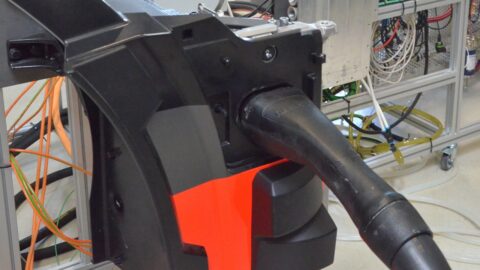
The Alphenaar uses an innovative energy system. The energy containers - "ZESpacks" - are standard 20ft containers. They are filled with batteries and charged with green energy. As soon as the ship arrives at the first charging station at the CCT in Alphen aan den Rijn, the first two ZESpacks are loaded and swapped.
Emissions from inland navigation
Inland shipping plays an important role in reducing emissions. Within transport, it is responsible for five per cent of CO2 emissions in the Netherlands. In addition, eleven per cent of total Dutch NOx emissions are caused by inland shipping. Green Deal Zeevaart, Binnenvaart en Havens' ambition is to reduce inland shipping emissions by 50 per cent by 2030. Achieving this will require a transition to fully electrically powered waterborne transport.
System change
ZES provides the solution to put this system change into operation. It consists of a complete service package based on interchangeable energy containers with green energy, open-access charging infrastructure and a pay-per-use payment concept for ship owners. In doing so, the charging stations can serve as energy hubs. This means they can stabilise the grid at peak loads. It is also possible that other vehicles will charge there. The battery containers are compact and easy to move. This makes their deployment to supply and store energy at all kinds of locations possible. Think, for example, of construction sites or festivals.
Governments and businesses
"The energy concept that ZES brings to the market contributes directly to reducing emissions by saving around 1,000 tonnes of CO2 and 7 tonnes of NOx per ship per year. In addition, ships sailing with ZES produce no particulate matter and noise," says Willem Dedden, CEO of ZES on their website.
Pay-per-use construction
The concept is based on a pay-per-use model. This means that ship owners only pay for the renewable energy consumed and the hire of the battery container. The investment in the battery containers is being funded by ZES. This approach provides a turnkey solution for improving sustainability. Heineken Brewery, together with transport operator CCT, is the project’s first customer. A ten-year contract has been signed.
Assembly and testing
Wärtsilä is supplier of the first battery containers. It worked in recent months to assemble and test the energy containers. These are equipped with safety and communication systems. They also contain 45 battery modules totalling 2MWh. This is comparable to the capacity of about 36 electric cars.
Tailor-made
The battery containers are fully customised. The interchangeability of the containers makes the project unique. Charging is done with certified green power at the first ZES charging station at CCT's container terminal (the Alpherium) in Alphen aan den Rijn. ENGIE was responsible for the development of this charging station and delivered it last April. The Alphen conversion took place in July. This included the installation of a standard connector connection to receive battery containers. The first successful trial run has now taken place. Now it is a matter of gaining as much user experience as possible so that emission-free sailing becomes a reality.
Source: Zero Emission Services
Photo by Gerd Altmann, via Pixabay