The three finalists of the Prins Friso Ingenieursprijs have been announced. The contenders are Bas Reedijk, Water department head at BAM Infraconsult, Erik Duisterwinkel, innovator, data scientist & sensor expert at Antea Group and Jelte Kymmell, managing director & founder of Mocean Offshore. The award ceremony will take place on Wednesday 4 March, during the Day of the Engineer at De Oude Bibliotheek Academy.
With the award, KIVI wants to make excellent engineers and their work visible. For example, the three finalists and their work are described on the KIVI website:
1. Dr Erik Duisterwinkel: Erik is mainly involved in projects where many stakeholders and different disciplines come together. In Groningen, for instance, he conducted research into a supplementary measuring method to identify the causes of damage to homes caused by gas drilling. And he came to a recommendation for a measurement setup that better captures the whole chain of causes. He also started a PhD project to inspect water pipes and industrial mixing tanks from the inside. He investigated whether this was possible using balls, equipped with sensors, flowing along in the tap water and liquid in the mixing tank. The PhD was eventually embedded in a European project.
2. Ir. Jelte Kymell: Among other things, Jelte's company developed Mocean Forecast (MO4), a solution to a major dilemma during offshore operations. A ship that needs to unload cargo onto a floating platform, for example, must take into account waves that cause the ship, cargo and platform to move relative to each other. If movements are too violent, this can lead to material damage, or dangerous working conditions. MO4 gives managers in offshore operations a risk assessment that is much more accurate. As a result, work downtime can be reduced by about a third. MO4's estimation is based on a highly detailed weather forecast with many variables, which the on-site system automatically processes into a computer model. The model predicts the ship's movements and sensors measure the actual movements. The results go back into the self-learning algorithm, so the model automatically becomes increasingly accurate.
3. Ir. Bas Reedijk: Bas is department head of Water at BAM Infraconsult. One of the high-profile projects he has been involved in involves the construction of flexible groynes: stone dams that channel water. Thanks to the dams, a river keeps a deep channel and no unwanted sandbanks form. The groynes designed by BAM Infraconsult are composed of cross-shaped concrete blocks with a kind of arrow shape at the ends. As a result, they hook into each other, adding to the strength of the whole. They allow water to partially pass through, which is good for water flora and to prevent certain forms of erosion. Less concrete is also needed. Moreover, these new groynes can be moved relatively easily, something that is difficult with conventional groynes. A variant of this type of concrete blocks is now also being used to reinforce the Afsluitdijk - also as a precaution against climate change. The cross-shaped concrete blocks are not only in Dutch waters; over the years, these blocks have been used in many places around the world.
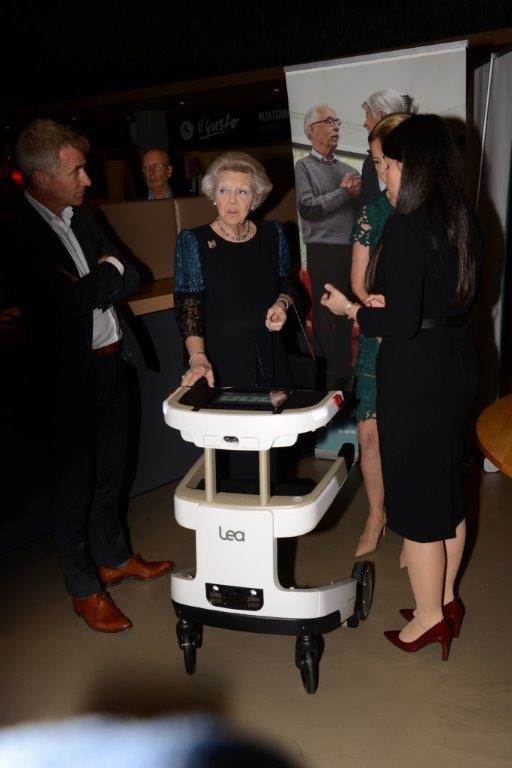
The title engineer
Organisation KIVI believes it is important that the title of engineer continues to exist, it writes on its website. "There is no way we can imagine a world without engineers. Even in the oldest history, it was inventions by engineers that underpinned innovations. The engineer has traditionally linked his scientific knowledge to the practical challenges demanded by our society. In more and more fields of application, the engineer is an essential factor. For example, in healthcare, with its scanners, radiation systems and prosthetics - even manufactured in modern 3D printers - the engineer is of enormous value.
The impact of the engineers is visible in space and therefore also in climate developments, where their developments enable them, for example, to predict approaching natural disasters and monitor the quality of roofs. Our communication, which knows no borders, would not be possible without satellite traffic. Yet in the Netherlands, unlike in Germany, Belgium and France, for example, the engineering profession does not have the appreciation it deserves. KIVI is therefore striving to preserve the title of Ingenieur (instead of just Master of Science), and each year, for its 'Engineer of the Year′, it looks for engineers who, precisely with their knowledge, throw themselves into a social problem.
Voting for the three nominees is now open. Voting closes on 3 March.
Source: KIVI/De Ingenieur.
Main photo: Still from YouTube video.











