Last year, companies from the food industry were interviewed about the most promising Foodtech applications for the next five years: robotisation, data technology and new processing techniques such as, for example, high-pressure application. Technology as a means to grow and strengthen competitiveness. The food industry is constantly working to innovate processes and products. This is necessary for several reasons.
Consumers and society want more information on food production
Consumers absolutely want safe products that are traceable ánd affordable. That same consumer is somewhat confused when it comes to food and technology. They want healthy food but are at the same time concerned about the long-term effects of processed food. Technology also creates a counter-movement, namely the call for 'high-touch' products made by human hands. In the bread industry, for instance, you see investment in authentic appeal: a smaller-scale brand within a large company with specific marketing.
Using technology to produce more, more efficiently and more sustainably
Producers will have to produce more and more efficiently to keep feeding the growing number of inhabitants. Competition from low-wage countries is increasing but the Dutch food industry can positively distinguish itself here with higher labour productivity and high food safety.
The world population is growing to 10 billion by 2050 and increasing prosperity makes it necessary to produce sustainably and with fewer resources. A radically different diet is needed for people and the environment and the food industry will have to respond to this even more. The National Prevention Agreement is an excellent follow-up step, but there will really have to be an acceleration, preferably without government coercion. The food industry can take an important position here as 'cooks and menu makers' for BV Nederland.
Foodtech applications on the rise.
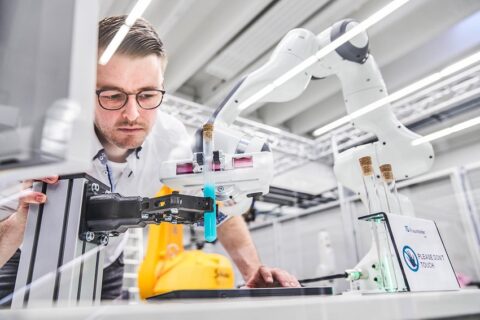
The barriers to robotisation in food industry have been removed. The sector is seeing an increasing number of precision robots that can better process delicate and ever-changing products in an often challenging environment (heat, moisture, cold). In addition, robotisation reduces dependence on the labour factor. From a food safety perspective, less human interference in the production process reduces the risk of contamination. Moreover, the use of robotisation makes work more attractive. More production jobs disappear and more technical jobs appear. This is attractive for the sector image, which is necessary because the food industry is also facing an increasing shortage of technicians. ING has calculated that 47,000 new employees will be needed by 2030, including pension replacements. Almost 50% of these can be met with technology.

Data technology for better traceability and transparency.
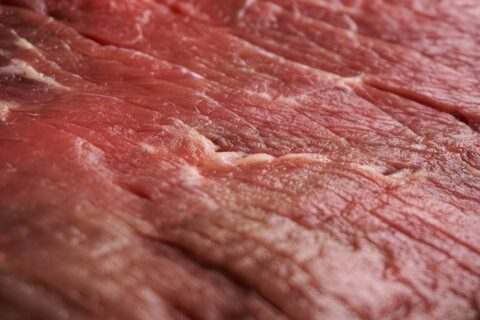
Application of data technology helps lead to better prediction and planning of production. In the process, 100% traceability of products throughout the food chain, from farm to fork. It is then easier to guarantee antibiotic-free meat, for example. Or secure the Better Life label throughout the chain.
Value for money: technology offers helping hand.
The value case for investing in the three promising food technologies is getting better and better because the payback period of these investments is getting shorter, and labour costs continue to rise, even in countries like Poland. The payback period is also getting shorter because the investments serve multiple purposes. Robotisation makes the production process more constant and less labour-intensive. An upward trend in Tech investments can lift competitiveness to a higher level and thus also contribute to the continuity of food production and processing in the Netherlands.
Want to know more? Find the summary and the ING sector study 'Foodtech, technology in the food industry. Robotic arm offers food industry a helping hand'.
This article was written by: Ceel Elemans, Sector Banker ING Food & Agri