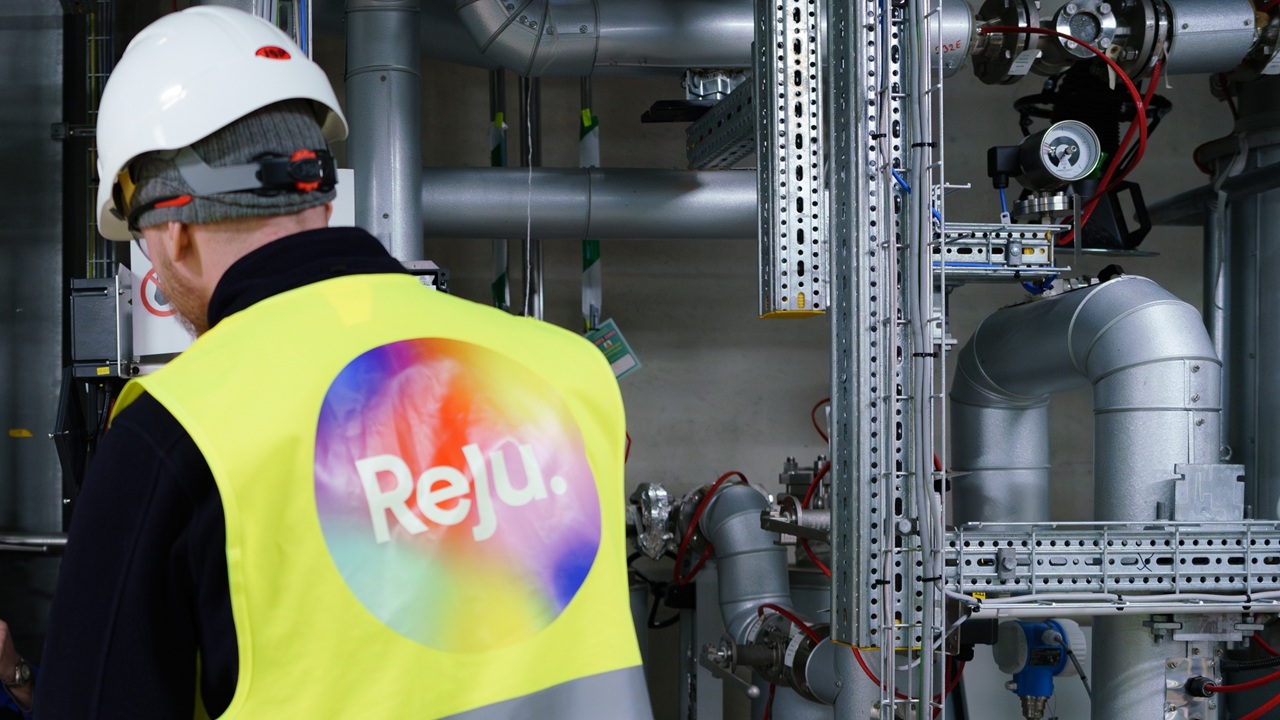

Reju, a specialist textile regeneration company, and Circle-8 Textile Ecosystems, developer of ecosystems and infrastructures that enable textile recycling, are to collaborate. The aim is to build a circular textile ecosystem in Britain.
The future of materials does not lie in their extraction. It lies in circular use. Circle-8 promotes the new circular textile industry by building an ecosystem and infrastructure that enables textile recycling. The company is engaged in the design, construction and commissioning of a network of automated textile sorting and pre-processing facilities to convert non-reusable textiles into raw materials for fibre-to-fibre recycling processes. The ultimate goal is to implement industrial polymer recycling facilities for textiles in Britain to realise a circular future for textiles.
Textile waste
Circle-8 will supply Reju's future European regeneration hubs with raw materials from post-consumer textile waste. There, they will be processed in the first automated sorting and pre-processing facility (ATSP), part of a network of industrial-scale facilities. Reju will then use the raw materials to produce its regenerated Reju Polyester, which has a 50% lower carbon footprint compared to virgin polyester and can be infinitely regenerated.
Textile recycling
"By collaborating with the growing Circle-8 and ATSP ecosystem, we can increase the efficiency of the textile recycling process and make it simpler and more accurate resulting in a premium product that meets Reju's high polyester standard," said Patrik Frisk, CEO of Reju. "As more consumers and garment producers become aware of the importance of keeping textiles out of landfills, it is crucial to have automated, streamlined processes and facilities at the sites where textile waste is located."
Transition to circular textile production
The collaboration between Reju and Circle-8 will help build a UK material processing infrastructure and establish partnerships for a fully transparent and viable fibre-to-fibre ecosystem. The deal will help UK fashion brands and retailers transition to a circular textile industry. As Circle-8 provides large-scale pre-sorted and pre-processed raw materials for Reju's patented regeneration technology, the partnership will ensure efficiency, accuracy and scalability for the more than 700,000 tonnes of non-reusable textile waste produced in the UK every year.
Collaboration
"Reju and Circle-8 share an unwavering commitment to enabling true textile-to-textile recycling; not just in the UK, but globally," said Cyndi Rhoades, co-founder and CEO of Circle-8. "Our collaboration underlines the importance of partnerships and innovation in turning textile waste into new raw materials. As regulators worldwide work to tackle the textile waste problem, Reju and Circle-8 are committed to scalable solutions that meet regulatory requirements and help enable a sustainable future."
Photo: Reju
Read also: Sustainable car Phoenix has closed-loop recycling rate of 75 per cent











