
German steel companies thyssenkrupp Steel and HKM and the Port of Rotterdam Authority are exploring the possibility of setting up international hydrogen supply chains.
HKM and thyssenkrupp Steel need more and more hydrogen during their transition to climate-neutral steel production to produce steel without using coal in the process. For decades, both companies have been importing coal, iron ore and other raw materials via their own terminal in Rotterdam. Subsequent transport is via barges and by rail to their blast furnaces in Duisburg.
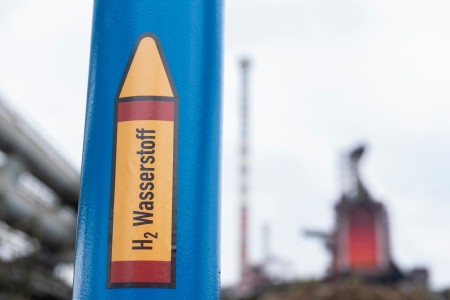
H2 Wasserstoff Duisburg
Together, the parties want to explore the possibilities of importing hydrogen via Rotterdam. They are also investigating the possibility of laying pipelines between Rotterdam and thyssenkrupp Steel and HKM's steel plants in Duisburg. The cooperation could act as a framework for other initiatives.
Green hydrogen
Port of Rotterdam Authority is already investigating the possibilities of importing hydrogen from a large number of countries and regions worldwide. Green hydrogen is a sustainable alternative to coal, oil and natural gas. Importing large quantities of hydrogen is necessary. Europe wants to reduceCO2 emissions and become climate neutral by 2050. At the same time, it wants to maintain a strong industrial base.
CO2 transport
Rotterdam is also setting up aCO2 transport and storage system called Porthos. It is also being considered as aCO2 storage site for blue hydrogen production through the 'H2morrow steel' project. Thyssenkrupp Steel is a partner in this project.
Cross-border infrastructure
Cross-border infrastructure is needed to support the energy transition. In particular, additional pipelines are needed. A concrete and significant demand for hydrogen from the steel industry as an alternative to coal, and the possibility of storingCO2, can act as an incentive to realise this infrastructure.
Signal effect
The cooperation between the port of Rotterdam and Duisburg as the steel capital of Europe could have a signal effect for establishing supply chains for the energy transition. It can thus contribute to an important sustainable European industrial and logistics cluster.
Photo: thyssenkrupp Steel











