
Demand for service robots for professional use rises. A total of 158,000 service robots were sold by 2022, which is an increase of 48%. Among other factors contributing to growing demand is a shortage of personnel.
This is according to figures shared by the International Federation of Robotics (IFR). "The service robot market is developing rapidly," said Marina Bill, President of the IFR. "A shortage of skilled workers and a lack of workers willing to perform service tasks is driving demand. The IFR identifies nearly 1,000 service robot suppliers worldwide providing autonomous services."
Rising demand with an eye on hospitality applications
The increase is greatest when it comes to applications in hospitality, where a total of 24,500 service robots will be in use by 2022. This represents a 125% increase from a year earlier. These include robots that guide people, provide information or focus on telepresence.
More service robots deployed for transport and logistics
The use of service robots for transport and logistics is also on the rise. In total, parties commissioned some 86,000 service robots for these purposes in 2022. This is 44% more than a year earlier.
This category is broad, by the way. It includes not only robots that transport goods in distribution centres, for example, but also robots that deliver food and/or drinks in a restaurant, for example. Sales of such robots for use in open indoor environments where members of the public are present rose 78% to 37,300 units.
More demand in view of agricultural applications
Service robots are also increasingly popular in the agricultural sector. Demand from this sector is up 18% to 8,000 service robots by 2022. The robots perform a variety of tasks, ranging from cleaning barns to milking cows.
Several factors are contributing to the growing demand. These include a lack of human workers in many agricultural regions, as well as demand for more sustainable forms of farming and animal husbandry.
Increasingly used for cleaning tasks
Companies are also increasingly using robots to perform cleaning tasks. By 2022, nearly 6,900 service robots were sold for this purpose. This represents an 8% increase from a year earlier.
The main application is floor cleaning; 4,900 service robots are focused on this, which is an increase of around 10%. This application accounts for more than 70% of all service robots purchased for cleaning tasks in 2022.
Lower demand for medical and healthcare applications
Medical and healthcare applications are the only applications for which demand for service robots actually declined in 2022. A total of 9,300 service robots were sold for these applications. This is 4% less than in 2021.
The IFR also briefly discusses the consumer market, showing the major differences between the business and consumer markets. For instance, manufacturers produce service robots for the consumer market on a large scale, while production for business applications tends to be considerably smaller in scale. This is also reflected in the figures shared by the IFR. For instance, a total of 5.1 million service robots were sold to consumers in 2022, compared to 158,000 units for business use.
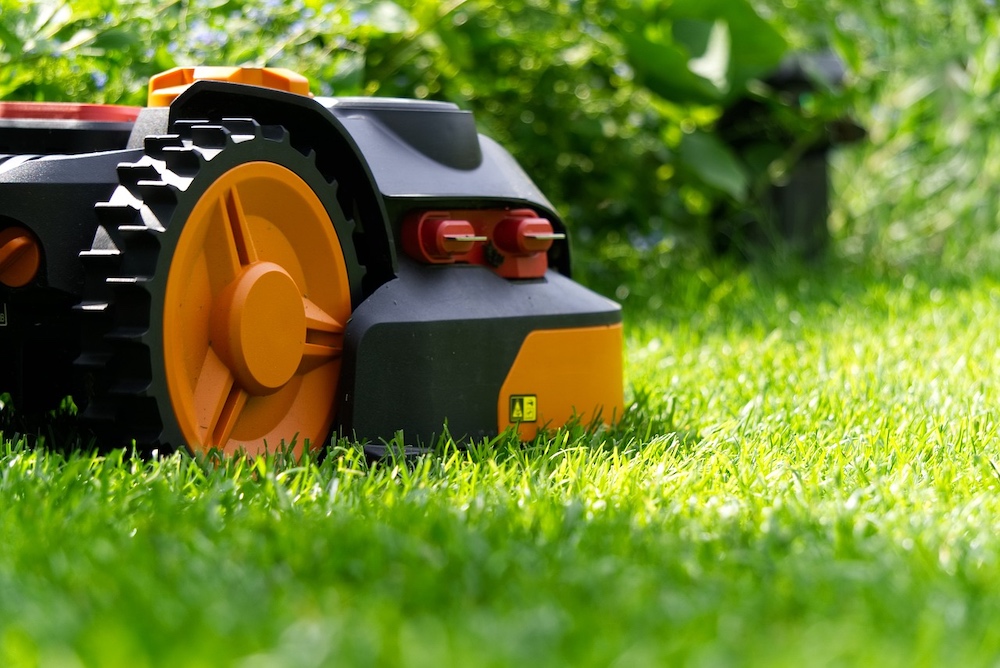
Zooming in on the consumer market shows that vacuuming and mopping robots make up the largest segment; a total of 2.8 million of these robots will have been sold by 2022. In addition, consider lawn mowing robots, of which 1.1 million units crossed the counter in 2022. Service robots for social interaction and education are also a large segment with 157,000 units sold in 2022. Educational robots account for about 104,000 units in this regard.
More information on the survey is available here.
Author: Wouter Hoeffnagel
Photo: Markus Distelrath via Pixabay









