Will the farm of the future eliminate hunger? It's a question being pondered in several places in the Netherlands. Also from politics, farmers are being helped to get as much as possible out of their crops.
State Secretary Van Dam recently announced the provision of 1.4 million euros to buy satellite data that farmers can use to produce more sustainably and efficiently. "This data provides detailed information on soil, atmosphere and crop development, among other things. Specialised companies convert the data into targeted irrigation, fertilisation and spraying advice for farmers. The satellite data is offered online as open-data and can be freely used by anyone."
Reading data
The data comes from so-called earth observation satellites orbiting the earth at a distance of 500 to 900 kilometres. Using high-quality measuring and recording equipment, they collect unique information about soil quality, moisture content, temperature and the atmosphere. They can also analyse biomass development and nitrogen and starch content in the crop. In addition, the satellites collect information on, for example, the development of water quality, forestry and nature. The satellite data is already available this upcoming growing season via satellitedataportal.co.uk.

Reading the data from the satellites, a complicated process, will be done by knowledge institutes and specialised companies for the time being. They will then translate this into useful information for the boe.
City Farm
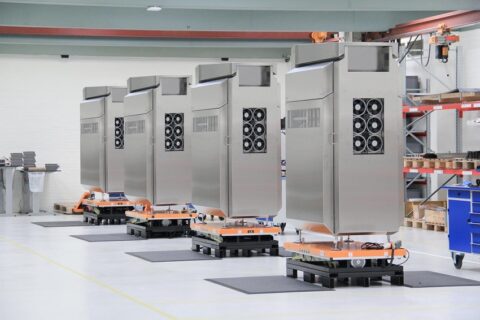
One of the things Van Dam wants to achieve with the investment is that the Netherlands remains at the forefront when it comes to gardening and agriculture. Other locations are also thinking about the farm of the future, which should focus on precision agriculture, big data and autonomous machines. In Dronten, for example, work is under way on a 'City Farm' concept: a lettuce factory where leafy vegetables are grown vertically in light- and airtight climate chambers. The lettuce heads, intended for De Staay's salad meals, are grown under special LED lights from Philips. In other in-house test sites, Philips is testing 24 different light recipes with two eight-storey racks. Together with CO2, temperature and different substrate choices, this should lead to the most ideal growing recipe, including for De Staay's lettuce.
Autonomous machines
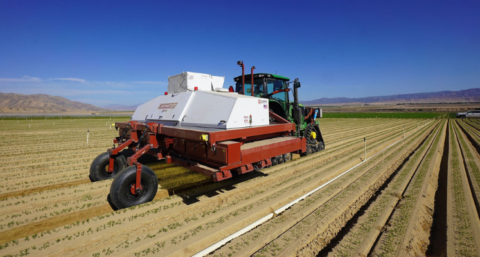
Work is also being done to develop autonomous agricultural machinery. Tractors with a GPS application have already been embraced by many farmers, but the use of fully autonomous machines is still a step further. There already is one, by the way: Steverink Techniek developed a fully autonomous potato harvester. In Raalte, mechanisation company Veenhuis is working on a prototype autonomous manure tanker. This will take the manure from a container, drive over the land and serve it to the soil. This is all done with sensors that measure on the spot how much phosphorus, potassium and nitrogen is in the manure.
All in all, new, more efficient forms of agriculture should not only ensure a better economy, but also address the global food crisis.
"If we do nothing, we will then need about three times the earth's surface area to meet the demand for food for nine billion people," argued dr.ir. Corné Kocks of the Professorship of Precision Agriculture at Aeres, the agricultural college in Dronten where much of the research takes place, recently.
In any case, the Netherlands is leading the way. For instance, 17 countries have shown interest in researching city farming in Dronten.
> Also watch the video on YouTube
Soon you will read on Maakindustrie.nl an interview with a farmer who has already made precision farming his own.
Sources: YouTube/Philips and www.satellietbeeld.nl
By: Kelly Bakker