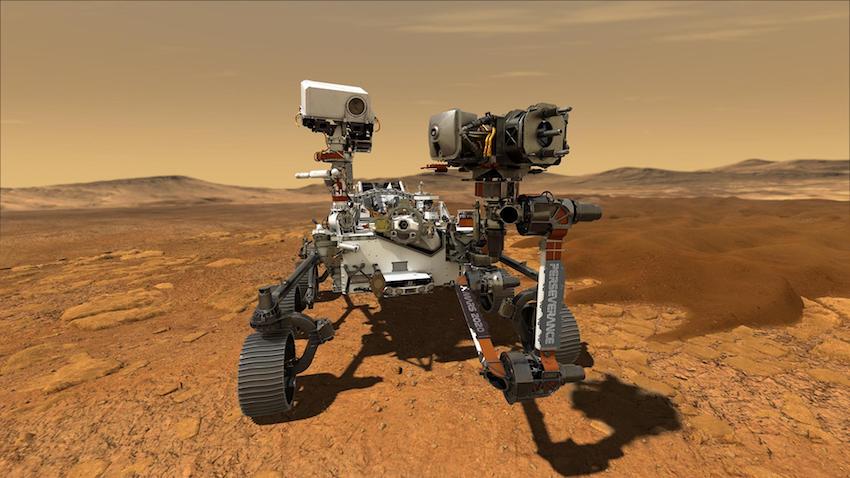

On 18 February, the Perseverance Rover landed safely on Mars. Just under a month later - on 15 March - the robot vehicle collected samples from the planet's surface for the first time. Dutch technology is making an important contribution to protecting these samples.
As in previous missions, the robot performs on-site measurements on Mars samples. This is done with different instruments. What is new is that the robotic vehicle also collects samples that are eventually stored in narrowly defined locations on the Martian surface. On a subsequent mission, the samples can then be taken back to Earth. Once on Earth, scientists will examine them more closely with much better instruments. For example, to find out the chemical composition of the samples.
Precautions
NASA has taken the necessary precautions to optimally protect the samples. Besides checks on the sample tubes themselves, it took measures for the enclosed space in which the sample tubes are transported. This is to give foreign dusts - which may have been released from materials from the Mars rover during the mission, for example - no chance.
Thermally stable thin sheets
Engineers at the Jet Propulsion Laboratory have used thin sheets made of the thermally highly stable Tenax. This is a 2,6-diphenylphenol-based polymer. It has the special property of being very good at adsorbing volatile organic compounds in air and liquids.
Apeldoorn
To supply these Tenax sheets, NASA called on Apeldoorn-based chemical company Buchem. This would be the only company in the world producing this material. Buchem already supplied such material for previous missions. NASA has been using this material for its space missions since the 1970s. However, this new order was a special one.
Spheres versus plates
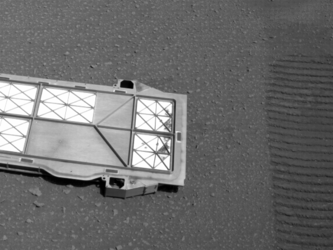
Jan Peter Willemsen, Senior Scientist at Buchem, explains why: "Previous missions involved spheres of Tenax. We make these for customers all over the world. It is used as a column material to adsorb volatiles from air or liquids. However, the Mars project involved thin sheets of about ten by twenty centimetres. We had to ensure that we could guarantee the same strict specifications in terms of density and adsorption of gases over the entire surface."
Niche in a niche
"From our experience in manufacturing disc filters, which have a diameter of 47 mm, we could already make such flat structures. But these are quite a bit smaller, making it easier to select parts with consistent quality. By further refining the otherwise secret manufacturing process, we managed to meet the desired specifications for those large areas as well. Very special, such a niche application in a market that could, after all, also be labelled a niche market!"
Waiting
The plates have already been delivered to the Jet Propulsion Laboratory in 2017. "No doubt all kinds of tests will have been carried out on the material there. As a manufacturer, you are not otherwise involved in that. Indeed, apart from the specifications, we knew nothing about the intended application. Only after landing on Mars did we know what the Tenax sheets were actually used for. It is therefore very special to see these plates sitting in the photos of the Mars 2020 mission," Sales & Innovation manager Mathias Guggisberg says enthusiastically. "By the way, we had no real doubts about NASA's experience with this form of our product. We are already in talks for a new project in the meantime!"
Credit photo: NASA/JPL-Caltech