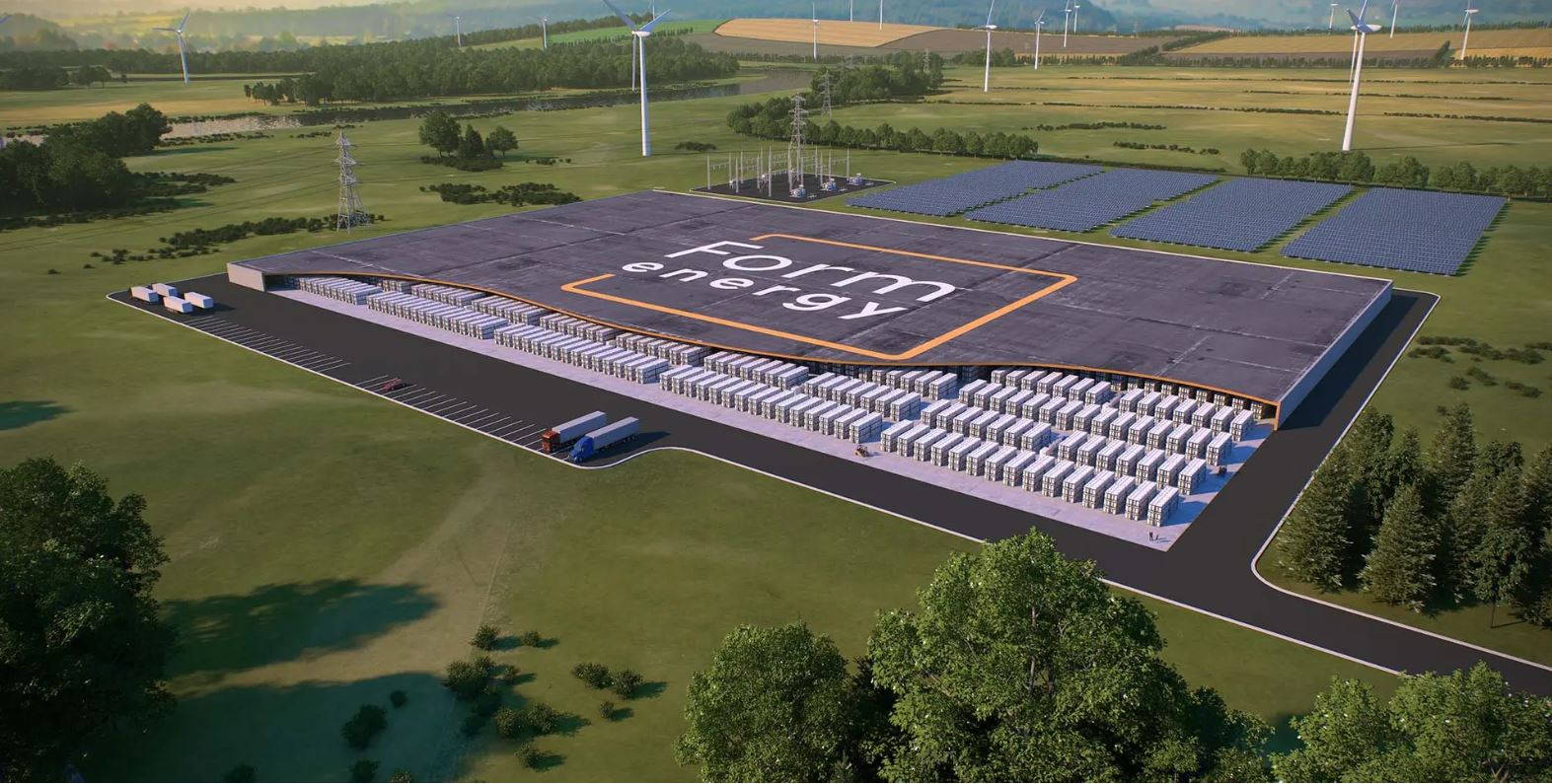

One of the most exciting companies in the field of grid-connected renewable energy storage is Form Energy. The company’s innovative iron-air technology promises to outperform large-scale lithium-ion battery projects. The costs, by contrast, are a fraction of those. Scaling up is on the horizon with the construction of its first factory.
Iron-air batteries
Form's batteries are built around huge flat iron-air cells. The cells are one square metre in size. Of these, about 50 are placed in washing machine-sized modules and immersed in a liquid electrolyte. These cells work effectively through rust cycles. They charge by applying energy to iron oxide, turning it back into metallic iron. You then add oxygen to start the rusting process and release energy.
Affordable solution
Iron is cheap and abundant, making these modules extremely affordable. They are long-lasting, safe and recyclable. This makes these batteries an exceptionally affordable form of energy storage, with a Levelised Cost of Storage (LCoS) more than 10 times lower than lithium batteries.
In contrast, the batteries do not charge and discharge as fast as lithium. Therefore, it seems likely that they will be deployed alongside lithium grid batteries in hybrid configurations. In doing so, the iron-air batteries provide longer, slower loads while the lithium packs handle temporary spikes. Form says they excel when energy needs to be stored for around 100 hours or more.
Wide interest
Form's technology has certainly impressed investors; Bill Gates' Breakthrough Energy Ventures has been on board for some time, along with Luxembourg steel giant ArcelorMittal and others. It is now time to go commercial. Last month, the company announced that it has chosen a production site for its first US battery factory: a 55-acre plant in the town of Weirton, West Virginia. The $760 million project will employ about 750 people. Construction is expected to start later this year and the first commercial iron-air batteries will be produced in 2024.