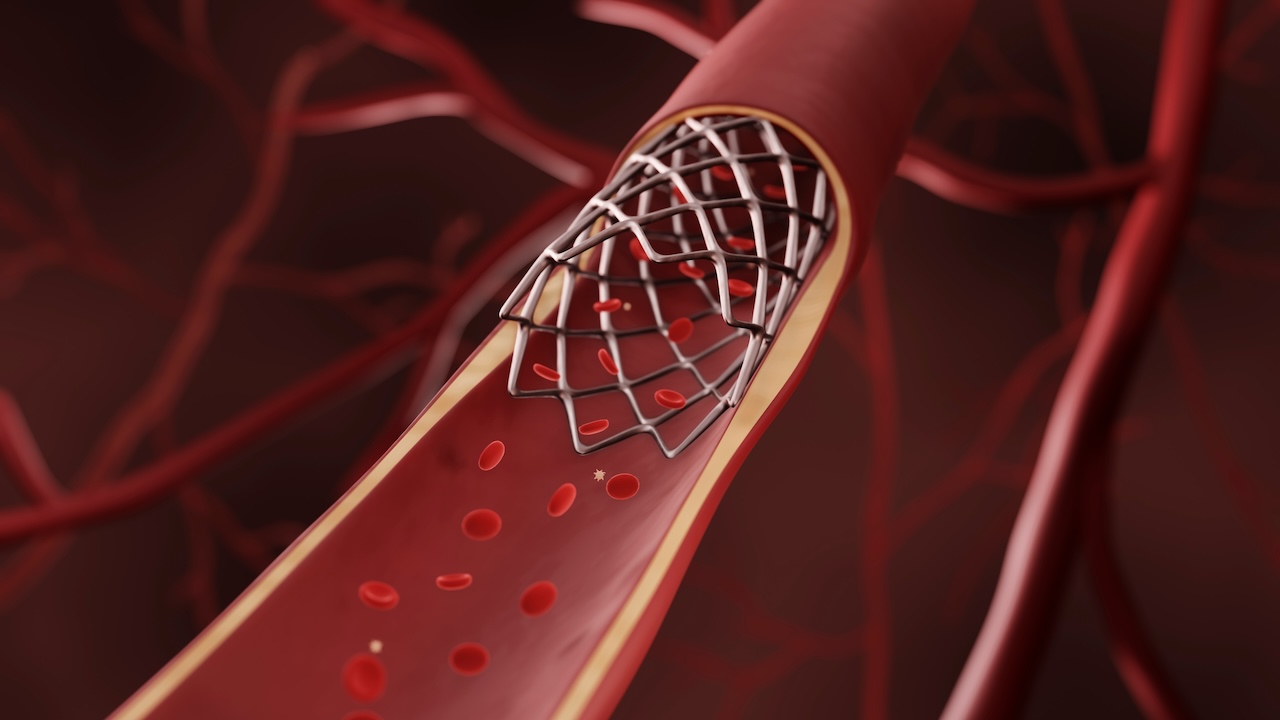

A new type of biodegradable stent was recently placed in a patient for the first time. It is the Resorbable Fibrillated Scaffold (RFS), developed by medical technology company and TU/e-spinoff STENTiT. The stent is made of microfibres, which gradually dissolve and eventually disappear without leaving any permanent material behind.
In a recent clinical trial, doctors successfully implanted the RFS device in patients with severe blood supply problems to the foot. In doing so, they managed to restore blood circulation with a small and non-invasive surgery.
Porous structure enables formation of healthy tissue
The RFS works just like a traditional stent and helps keep the artery open. Its porous structure allows the patient's own cells to grow inside the mesh. This stimulates the formation of new and healthy tissue, while also ensuring the repair of the blood vessel from within.
Bart Sanders, CEO of STENTiT and alumnus of TU/e: "Our goal is to develop the next generation of stents with regenerative properties, which help the body restore functional arteries, thereby improving long-term clinical outcomes. We are proud to have achieved this first clinical milestone, demonstrating the potential of our technology for a sustainable solution in advanced peripheral arterial disease."
Development at TU/e
The regenerative stent technology was developed with knowledge gained in the Soft Tissue Engineering and Mechanobiology (STEM) research group at TU/e. Anthal Smits, who is part of this group and works closely with STENTiT, explains: "It is immensely valuable to see that innovations that have emerged from our laboratory work, countless experiments and efforts of our researchers and students are now having a direct impact on patients' lives. This is partly possible thanks to the tenacity and vision of the STENTiT team to successfully bring this technology to clinical practice."
The stent has been placed in patients during a clinical trial. This study is designed to test the safety and performance of the RFS device. Doctors place the stent in up to 10 patients with severe blood flow problems in the lower leg. Known as CLTI, this condition affects an estimated 3.5 million people in Europe and the US. CLTI leads to over 250,000 amputations every year. Patients also often suffer from chronic pain, ulcers or gangrene due to the severely reduced blood flow.
Key insights
The study is taking place at the Medical University of Graz in Austria. The researchers are closely monitoring all participants for two years, with the aim of evaluating their recovery and the long-term effects of the treatment.
Prof Marianne Brodmann, head of the Department of Vascular Surgery at the Medical University of Graz: "This first human clinical study provides important insights into the potential of this new technology in CLTI patients. This device provides temporary support of the blood vessel structure while stimulating the repair of new tissue, potentially reducing the need for reoperations."
With its RFS technology, STENTiT aims to provide a sustainable solution for patients with CLTI. By using the stent to stimulate the repair of new tissue, the company aims to reduce the number of reoperations and improve the quality of life for patients.










