
Concrete is the material of choice in many construction projects. However, the material also has drawbacks, such as a large carbon footprint. Researchers have succeeded in developing a more sustainable alternative. This involves a sustainable material that is 3D-printed from local soil and can create a load-bearing structure.
The material was developed by researchers at US Texas A&M University. Their research results were published at an American Chemical Society (ACS) virtual conference. "The environmental impact of the construction industry is a growing issue," states lead researcher Sarbajit Banerjee. "Some researchers are looking at additive manufacturing, or building structures layer-by-layer as is often done with a 3D printer. That development is beginning to transform the industry when it comes to waste reduction. However, the materials used in the process must also be sustainable."
Accounting for 7% of CO2 emissions
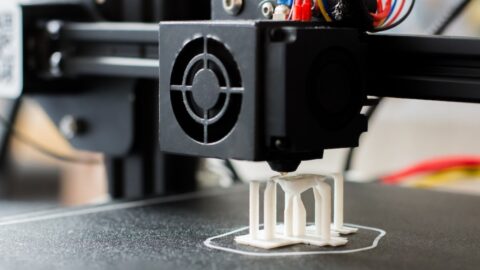
Previously, they have experimented with construction projects that use a machine to extrude layers of concrete, similar to what is done with a Fused Deposit Modeling (FDM) 3D printer. This method shows that additive manufacturing can help erect building structures quickly and cheaply. Figures from the International Energy Agency (IEA) show that concrete production accounts for about 7% of global CO2 emissions. The material is not recyclable.
"Historically, people built using local materials, such as mud brick (adobe). However, the shift to concrete leads to environmental problems," says Aayushi Bajpayee, a researcher in Banerjee's lab at Texas A&M University. "We wanted to turn back the clock and find a way to adapt materials from our backyard as a potential replacement for concrete."
Less impact on the environment
A key advantage of using local soil is its availability. Thus, instead of having to produce the material remotely and then transport it to the construction site, it can be made directly on site. This not only saves costs, but also relieves the environment. The researchers hope that one day their technology might also be used on the Moon or Mars to build settlements.
Soil consists of a different composition in each location. For example, this composition consists of the top layer where plants grow, followed by a clay layer, among others, and finally the rock of the earth's crust. The clay layer in particular provides the malleable nature that the researchers are taking advantage of in their project to create a printable material.
Chemical toolkit
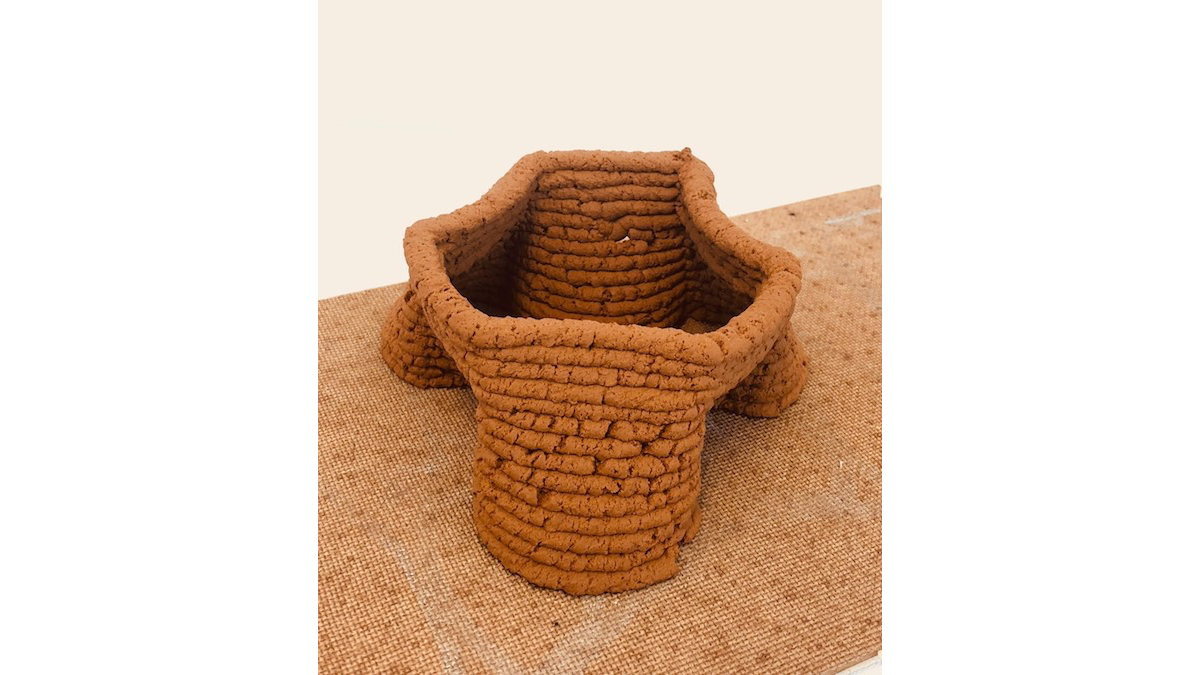
During their experiment, the researchers used local soil from the backyard of one of their colleagues. This soil was combined with an eco-friendly additive that binds the material and makes it easier to extrude for 3D printers. To make their approach suitable for all kinds of soil, the researchers then developed a 'chemical toolkit' that can convert any kind of soil into a printable building material.
To make it possible to print load-bearing structures, the clay mixture is reinforced by collapsing the microscopic layers on the surface of the material like a zip. This prevents the material from absorbing and expanding water, which could compromise the printed structure. The modified material can support twice as much weight as a standard clay mixture.
Producing larger test structures
The team now wants to improve the material's load-bearing capacity to produce larger test structures. In doing so, the researchers aim to bring the material as close as possible to a replacement for concrete. They are also collecting data to map the environmental impact and check whether the material is actually as environmentally friendly as thought. This includes looking at carbon footprint and recyclability.
Author: Wouter Hoeffnagel
Photo by: Aayushi Bajpayee