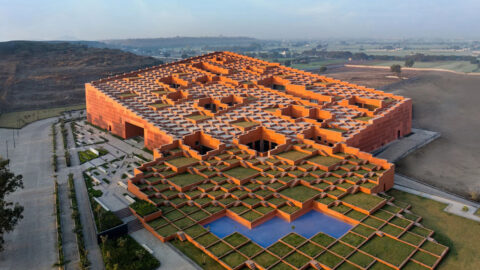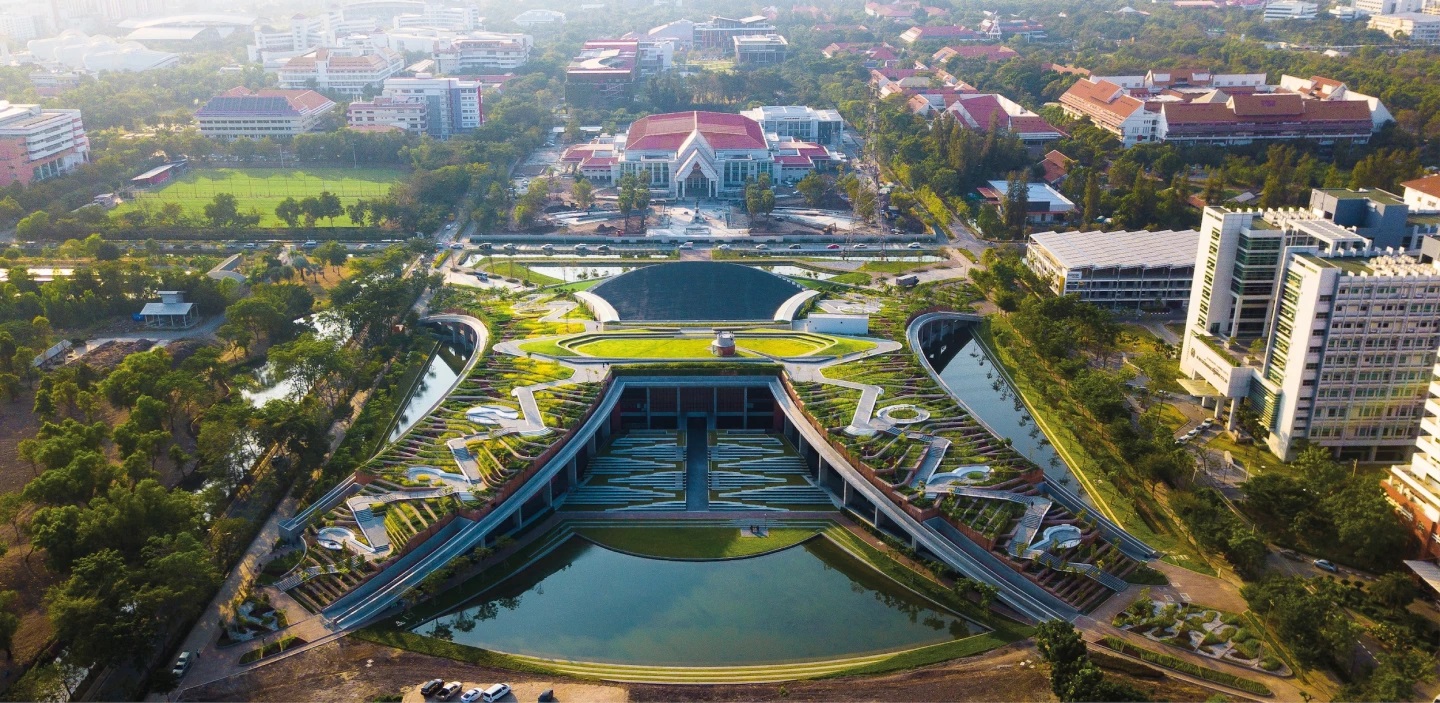

The Thammasat University Rooftop Farm (TURF) is turning the unused roof of Thammasat University's Rangsit Campus into a sustainable farm. The project combines solar energy and rainwater harvesting to teach students sustainable farming techniques.
TURF measures roughly 22,000 square metres, making it the largest organic roof in Asia . The design is derived from traditional Thai rice fields. Some 40 crops will be grown on the roof, including rice, vegetables, herbs and fruit trees. The crops have been specially selected for use on a roof. Annually, the project produces about 80,000 meals of organic food for the university. The campus canteen ensures that food waste is composted so that it can be used to fertilise the next crop.
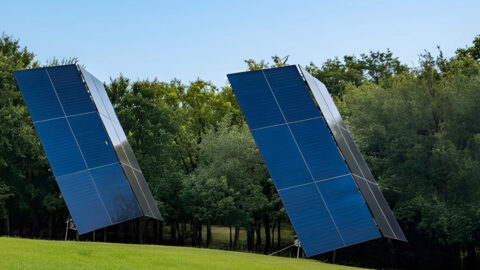
Energy for the farm and the university building below is provided by solar panels. Rainwater is collected in canals that direct it to reservoirs so that it can be used at a later date.
The sloping roof provides drainage that is 20 times more efficient than a traditional concrete roof. As rainwater zigzags down, each terrace benefits from the runoff water being gradually absorbed and purified. At the end of the terraces, rainwater is collected in reservoirs with a capacity of over 11 million litres.
The site has space for visitors to meet and talk. Those who want can also climb up the roof to enjoy a spectacular 360-degree view at the top. A large amphitheatre is used for teaching purposes and workshops.
TURF was commissioned late last year but has only recently been fully completed. The project is part of the Thai university's ambition to become more sustainable.