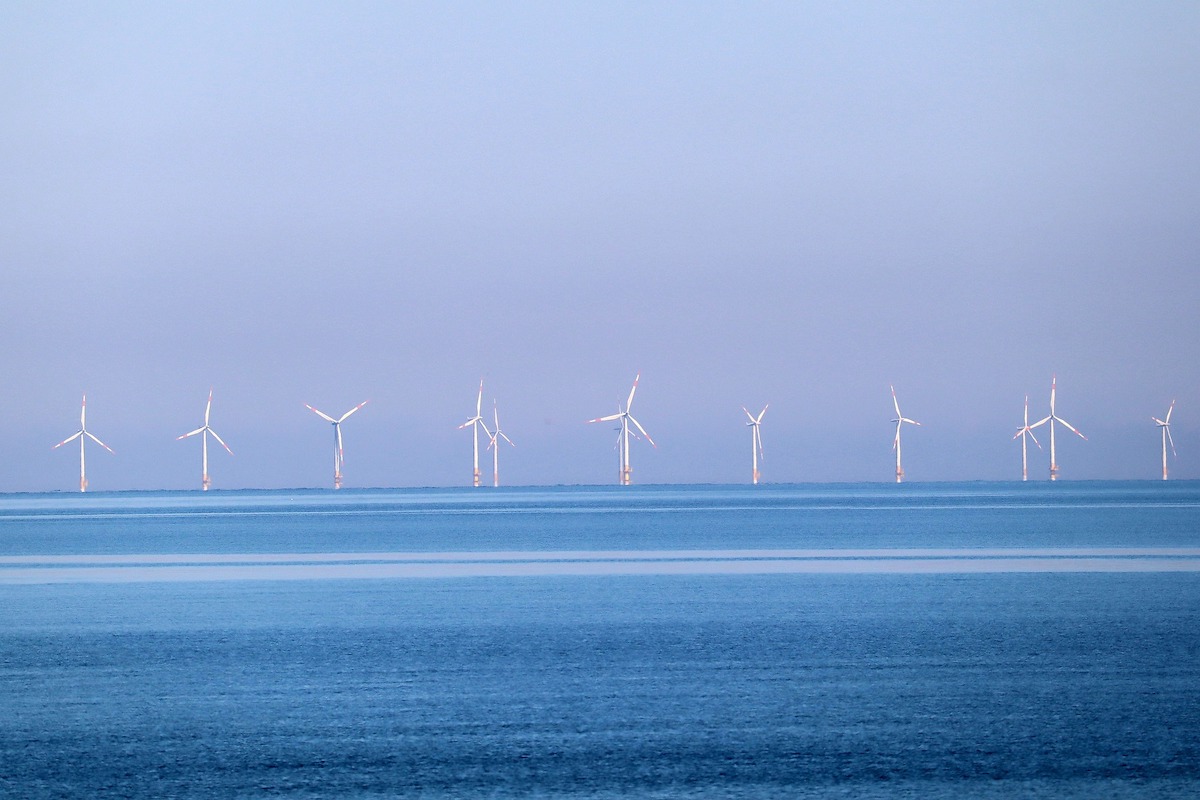

Sixteen partners from the European offshore renewable energy sector will join forces over the next three years around the Offshore Electricity Storage Technology Research (OESTER) project. The project aims to accelerate the development and roll-out of offshore energy storage solutions. The parties will specifically focus on demonstrating the benefits of technologies, as well as addressing key challenges in this area.
The energy transition leads to all kinds of challenges. Think of grid congestion, but also in large fluctuations in the production of renewable energy sources such as wind energy. For instance, offshore wind farms produce a large amount of energy on windy days, which can lead to energy surpluses. The surpluses cause energy prices to fall sharply, putting pressure on the business case of wind farms.
Improve balance and support business case for wind farms
Offshore energy storage can provide a solution and a viable solution to these challenges, according to the OESTER partners. By storing energy when there is overproduction, this energy can be supplied at a later time when demand is just right. This not only improves the balance on the grid, but can also support the business case of wind farms by providing wind energy at more times and at more attractive rates.
The aim of the OESTER project is to further develop and validate innovative energy storage solutions, while eliminating risks. In doing so, the project looks at solutions from a technological, economic, environmental and social perspective. The ultimate goal is to deliver scalable solutions that are applicable worldwide and support the rapid roll-out of sustainable energy systems.
Key technologies
Specifically, the project focuses on a number of key technologies:
- Short-term storage: batteries integrated in the monopiles of wind turbines anchored in the seabed (Verlume)
- Medium-term storage: compressed air energy storage (FLASC) and hydropower-based renewable energy storage (Ocean Grazer)
- Long-term storage: electrolysers installed on offshore platforms directly connected to wind farms (Battolyser)
The partners involved will develop front-end engineering designs (FEED) and prototype components to validate these storage systems. The partners will also deploy digital twins, which are virtual representations of the systems. With these, the parties intend, among other things, to evaluate the performance of the systems and optimise operation at gigawatt scale.
MOOI
The project has been approved for Mission-Driven Research, Development and Innovation (MOOI), a grant scheme aimed at projects that can help achieve the targets set out in the climate agreement. MOOI is one of Top Sector Energy's grants for energy innovation.
Partners involved are:
- Wind developers and operators: RWE, Vattenfall, APG, SSE
- Storage technology developers: Verlume, Flasc, Battolyser Systems and Ocean Grazer
- Companies supporting offshore renewable energy and storage: DMEC and SeaWay7
- Research and knowledge institutes to support ecology and digital twins of the system: Deltares, University of Groningen and TNO (project coordinator)
- Legal firm and industry association: New Ground Law and Energy Storage NL (the storage association of the Netherlands)
'Important step forward'
"The OESTER project represents a major step forward in addressing the challenges around integrating renewable energy. By enabling the deployment of offshore electricity storage technologies, it contributes to a more resilient and efficient energy system and supports the global transition to renewable energy," explains Iratxe Gonzalez-Aparicio, programme manager for System Transformation at TNO.
Bas Jansen, programme manager OranjeWind knowledge at RWE: "In the OESTER project, we will gain valuable insights on large-scale offshore energy storage. OESTER will demonstrate under which conditions offshore electricity storage is technologically and economically feasible, so that we can implement it in future wind farms for better system integration. This will facilitate the rollout of offshore wind and contribute to achieving our renewable energy goals."
Author: Wouter Hoeffnagel
Photo: Thomas G. via Pixabay











