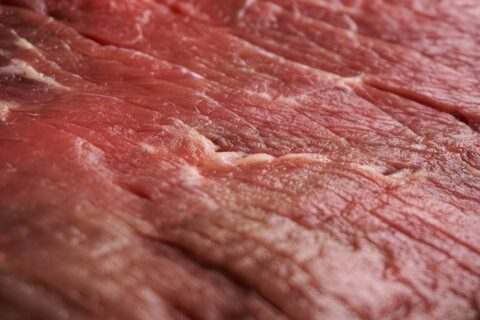
Meat substitutes are gaining more and more space on European supermarket shelves. This now includes plant-based steak. Producer Vivera will deliver the world's first 100 per cent plant-based steak to the 400 shops of British supermarket chain Tesco next week. Dutch supermarkets will follow next month and from the second half of this year the steak will also be in German, French and Italian shops.
Vivera in Holten - one of the three largest producers in Europewith a weekly production of more than 1 million meat substitutes - expects to produce millions more steaks this year. The meat substitutes are available in23 European countries and at some 25,000 supermarkets.
The steak, made from plant-based ingredients such as wheat and soya, is suitable for vegetarians, vegans and flexitarians. Gert Jan Gombert of Vivera: "A large group of vegetarians, vegans and flexitarians have had enormous interest in such a product for many years. With the breakthrough of large-scale production, a large group of consumers can enjoy this very tasty plant-based product. The smell, taste and bite are hardly distinguishable from real steak and we are convinced that it meets a huge need. It is of great importance that we eat less meat, both for our own health, animal welfare and for our planet. Innovative and high-quality plant-based products can make an important contribution to this.'
Vivera is adding the new product to its Plant-based range which already includes Falafel, Minced Meat, Bean Burger and a Gypsy Schnitzel. The Holten-based producer has been bringing a range of vegetarian and plant-based meal components in the Vegetarian, Lupin and Organic segments since 1990.
Vivera's focus is on achieving a product range consisting of 100 per cent plant-based products by the end of this year. The range includes over 40 meat replacement products composed of wheat, soy, peas, maize, rice and vegetables, among others.
The producer of meat substitutes is Founding Member of the Green Protein Alliance and co-founder of The Planet (Platform Sustainable Proteins). Both organisations encourage the protein transition from animal to plant-based proteins. This is better for humans, animals and the environment and creates new market opportunities for all parties in the chain. The company also has an advanced tofu production facility in Europe with the Dutch Tofu Company.
Large-scale plant-based production will be the future
The development of plant-based steak is part of the innovation of healthy and high-quality meat substitutes. Large-scale plant-based production is becoming the future;consumer interest in healthier and more sustainable food is rising sharply in large parts of Europe. For instance, two-thirds of Dutch people now no longer eat meat one day or more a week.
According to the UN Food and Agriculture Organisation (FAO), world consumption will double by 2050 if policies remain unchanged. Plant-based food production offers advantages due to much lower environmental impact and pressure on scarce resources such as arable land and water.