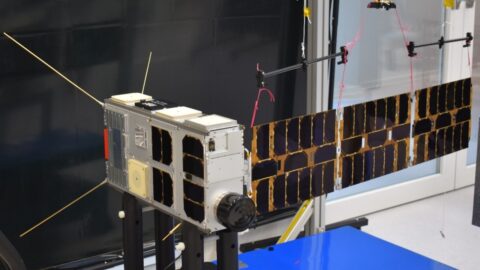
Another piece of Dutch high-tech is about to go into space. The Sentinel-5P satellite is carrying a Dutch-made measuring instrument.
Sentinel-5P is part of the European space project Copernicus. The satellite will be launched from Russia's Plesetsk base at the end of September. And the satellite has an important Dutch touch. A team of Dutch experts built Tropomi, an instrument for measuring air quality and greenhouse gas distribution on Earth. It is located at the heart of the satellite.
The Copernicus project was set up to monitor Earth's safety and health. Earlier, five Sentinel satellites went into space. All looked at our planet in different aspects.
Looking at the earth with the highest precision is much needed, according to experts. According to Pepijn Veefkind of KNMI, which is the scientific leader of the project together with the space research institute SRON: "With previous satellite measurements, we have been able to show the state of air quality over urbanised areas in the world, such as Western Europe and Eastern China. The red spots on the maps we make of these speak volumes. With Tropomi's precise observations, we are providing tools to address this problem."
Tropomi will soon be able to map the entire atmosphere from the satellite, from an altitude of 824 metres, every day with details of seven by seven kilometres. This high resolution makes it possible to detect air pollution at city level. The instrument 'looks and compares' and, through a series of steps, detects light reflected from the atmosphere and compares it with light directly from the sun. It is precisely from that difference between the two light sources that valuable information can be extracted about the composition of our atmosphere.
Sunken bars
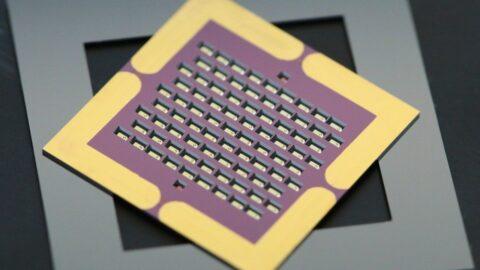
Tropomi is capable of detecting many different wavelengths, from infrared to ultraviolet. The light bounces through mirrors, is scattered by gratings and finally captured by a detector. Dutch innovations such as the 'recessed grating' and free-form optics make the instrument significantly better than its predecessors, according to its makers. Airbus incorporated these technological discoveries into the overall concept. Sytze Kampen of Airbus: "Our partners SRON and TNO came up with the idea of so-called recessed gratings, for example. That's a clever invention that allowed the instrument to be 40 times smaller. And that is pure profit in space travel."
Satellite Sentinel-5P will also be used to make more strides on the climate issue. Tropomi contributes to this by mapping in detail how greenhouse gases spread through the Earth's atmosphere. Veefkind: "A gas like methane, for example, occurs less in the atmosphere than carbon dioxide, but has a much stronger greenhouse effect. Tropomi is going to show where it comes from and where it goes."
Government
All together, the Dutch government invested some €80 million in the development of the space project since then-Minister of Economic Affairs Maria van der Hoeven signed the agreement with ESA in 2009. That money was used, among other things, for the realisation of Tropomi. Not only does the deployment of the instrument provide new scientific insights, it also puts the Netherlands on the map. "With this, we capitalise on where the Netherlands is already world-class internationally," said NSO deputy director Nico van Putten. "So with Tropomi, we also create opportunities for Dutch space technology on new international projects."
Kampen from Airbus: "In Tropomi, Dutch high-tech and many years of dedication from a close-knit team of specialists come together. That such a project is really ready for launch, you don't experience that very often in your career as an aerospace engineer."
Tropomi is a collaboration between Airbus Defence and Space Netherlands, KNMI, SRON and TNO, commissioned by the NSO and ESA. Airbus Defence and Space Netherlands is prime contractor for the development of the instrument. Scientific leadership is in the hands of KNMI and SRON. TROPOMI is funded by the Ministry of Economic Affairs, the Ministry of Education, Culture and Science and the Ministry of Infrastructure and the Environment.
By: Kelly Bakker
Source: ESA, Dutch Space/Sander Koenen, Tropomi