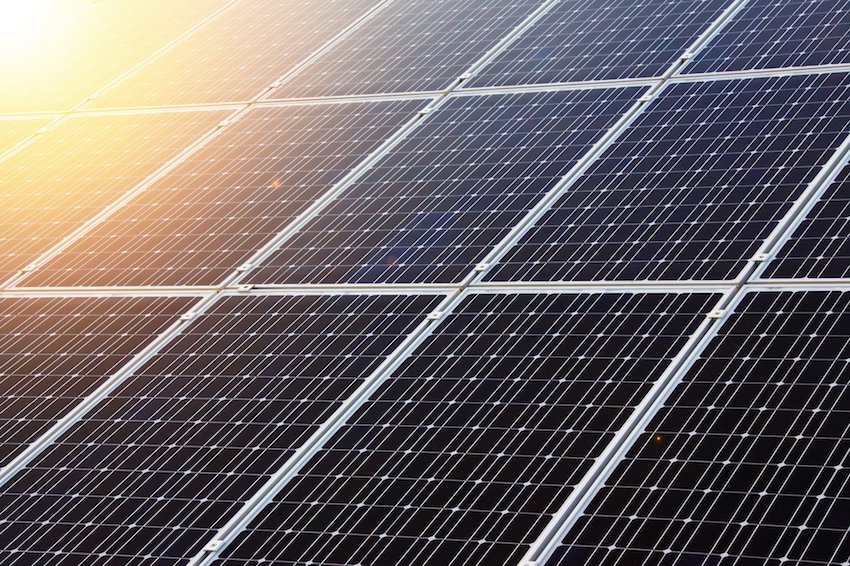

SolarDuck is to realise a 780kW offshore floating solar power plant off the coast of the Malaysian island of Tioman. This is a research project designed to assess the technical and economic feasibility of so-called Offshore Floating Solar (OFS).
Dutch-Norwegian SolarDuck is partnering with TNB Renewables Sdn Bhd (TRe) and TNB Research Sdn Bhd (TNBR) for the project. Both are part of Tenaga Nasional Berhad, Malaysia's largest electricity supplier. Aluminium and energy company Hydro Extrusion Norway is also involved in the project.
Offshore Floating Solar
The parties will jointly realise an OFS in Malaysia. An OFS is a floating solar farm intended for use at sea. The conditions in which such a solar farm operates are rough in some cases, including due to high waves and the presence of salt water.
SolarDuck is capitalising on this with its OFS. It provides a triangular platform, which floats several metres above the water and follows the waves. Among other things, this ensures that important electrical components are not exposed to seawater and remain both clean and stable. This increases the lifespan of the installation.
Flexibly connected and modular
The triangles are connected in a flexible manner. Among other things, this offers advantages in situations where the platform is hit by waves from multiple angles. The construction also increases stability, according to SolarDuck. The fact that the construction floats several metres above the water also contributes to this; thanks to the way it works, the platforms partially avoid the impact of waves.
The system is modular. In practice, this means that several platforms can be combined with each other to form a larger system. Linking the different platforms together can take place at sea. This simplifies the transport of the modules.
Wind-poor region
SolarDuck argues that Malaysia is ideally suited to the use of an OFS. "We are very pleased to partner with TRe, TNBR and Hydro. For Solarduck, this means realising a footprint in Malaysia, a country in a region with the world's greatest potential for OFS," said Koen Burgers, CEO of SolarDuck.
For Southeast Asia, solar energy is an interesting method for generating renewable energy. Partly because the region is relatively windless and wind turbines therefore produce less energy than in other regions. For some time, Southeast Asia has therefore been betting on solar energy. However, realising solar parks on land costs a lot of land, of which there is an increasing shortage. Public resistance to the realisation of solar parks on land is also growing.
Offshore solar farms could therefore be an interesting alternative. They make it possible to generate solar energy on a large scale without using scarce available land.
Letter of Intent
A Letter of Intent has been signed by the parties for the project. The parties hereby express their intention to deploy OFS technology. For this purpose, they are combining their expertise and creating synergies that will accelerate the development and embrace of offshore floating solar parks in Malaysia and Asia in general.
For Malaysia, the project should be a key step towards its goal of becoming carbon-neutral. The country wants to diversify its energy mix and create a sustainable energy system. "The main goal of TNB is to achieve 'net zero' while providing reliable and cost-effective energy supply without compromising the environment. Offshore floating solar offers an excellent opportunity for achieving this," explains Zarihi Hashim, Chief New Energy Officer at TNB.
Aluminium profiles
Hydro Extrusion Norway supplies the aluminium profiles for installing solar panels. Aluminium was deliberately chosen here with a view to the recyclability of the material. Hydro will produce the profiles in Lichtervelde, Belgium, and Magnor, Norway.
Author: Wouter Hoeffnagel
Photo: PublicDomainPictures via Pixabay











