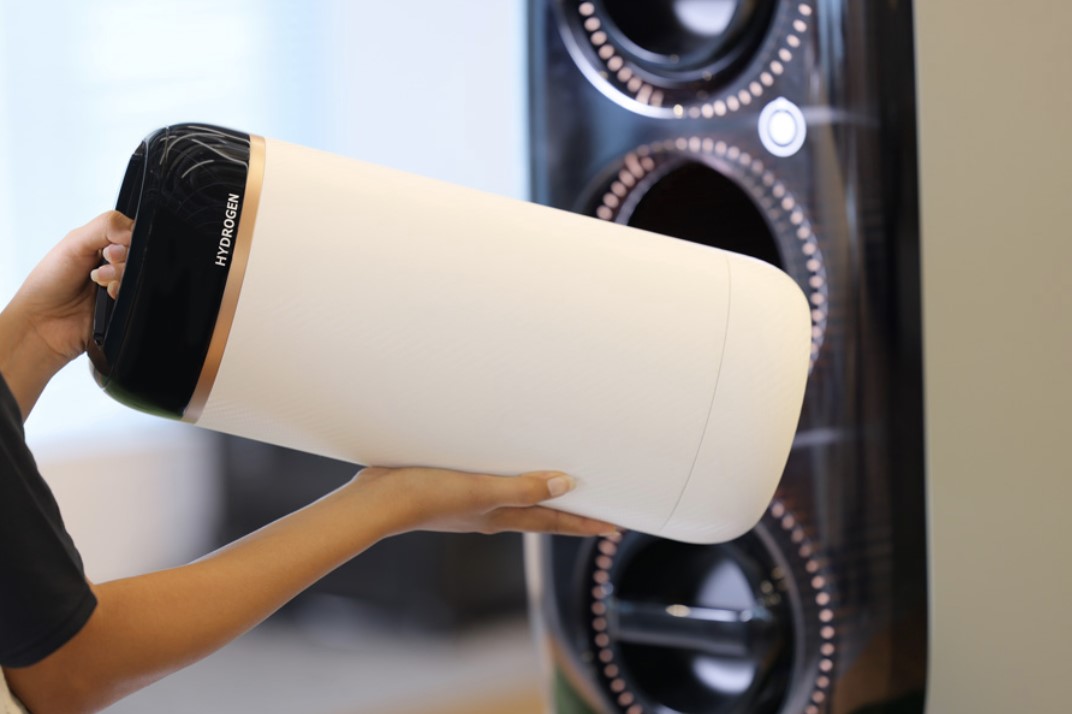

Toyota and its subsidiary Woven Planet have developed a working prototype of a portable hydrogen cartridge. The design will facilitate the daily transport and delivery of hydrogen energy.
Toyota and Woven Planet are studying a number of viable paths to carbon neutrality. They consider hydrogen a promising solution. This is because using hydrogen does not release any carbon dioxide (CO2). In addition, there are only minimal CO2 emissions during the production process. At least, if it is produced using renewable energy sources.
Supply chain
Together with Eneos Corporation, Toyota and Woven Planet are working on building a comprehensive hydrogen-based supply chain. This aims to accelerate and simplify production, transport and daily use. The trials will therefore focus on meeting the energy needs of Woven City residents and those living in the surrounding communities.
Benefits of using hydrogen cartridges
Hydrogen cartridges offer a number of advantages. They are portable, affordable and convenient as a portable energy solution. They make it possible to deliver hydrogen to the places where people live, work and play without the need for pipework. The cartridge can also meet energy needs in remote and non-electrified areas. It is also possible to deploy the cartridges rapidly in the event of a disaster.
Prototype
The prototype has the following dimensions: 400 mm (length) x 180 mm in diameter and weighs about 5 kilograms. It is designed to be easy to swap out and quick to recharge. The volume flexibility also allows for a wide range of applications for everyday use. For instance, the cartridge could generate enough electricity to run a microwave oven for about 3 to 4 hours. In doing so, the design team assumes that the final design will consist of a high-pressure hydrogen tank that has an electricity output of about 3.3kWh/tank.
Safe
Hydrogen production currently generally takes place using fossil fuels as an energy source. This is despite the fact that its applications are mainly found in industry. That is set to change. In order to use hydrogen as an energy source in everyday life, the technology must meet various safety standards. It must also be adapted to new environments. Toyota expects that, in the future, hydrogen will be produced with very low CO₂ emissions and used in a wider variety of applications. The Japanese government is conducting a series of studies to promote the safe early adoption of hydrogen. Toyota and its business partners are delighted to offer their cooperation and support.
Supply chain
Toyota's goal is to make hydrogen commonplace. This is possible if this clean form of energy becomes safe, convenient and affordable. By establishing the underlying supply chain, Toyota hopes to facilitate the use of hydrogen and ensure more applications. Woven City will research and test a range of energy applications using hydrogen cartridges. These include applications in mobility, domestic applications and many future possibilities we have yet to imagine. Together with innovators and those living in and around Woven City, Toyota will continue to promote mobility in the time to come. It will continuously develop more practical applications for hydrogen cartridges. In future demonstrations, Toyota will continue to improve the hydrogen cartridge. This will make it increasingly user-friendly while improving its energy density.
Climate-neutral society
The ultimate goal of this project is to achieve a climate-neutral society where everyone has access to clean energy. Toyota and Woven Planet aim to develop best practices for integrating clean hydrogen energy into everyday life. One way they will do this is by conducting demonstrations in and around Woven City.
Image: A prototype hydrogen cartridge (photo: Toyota)











