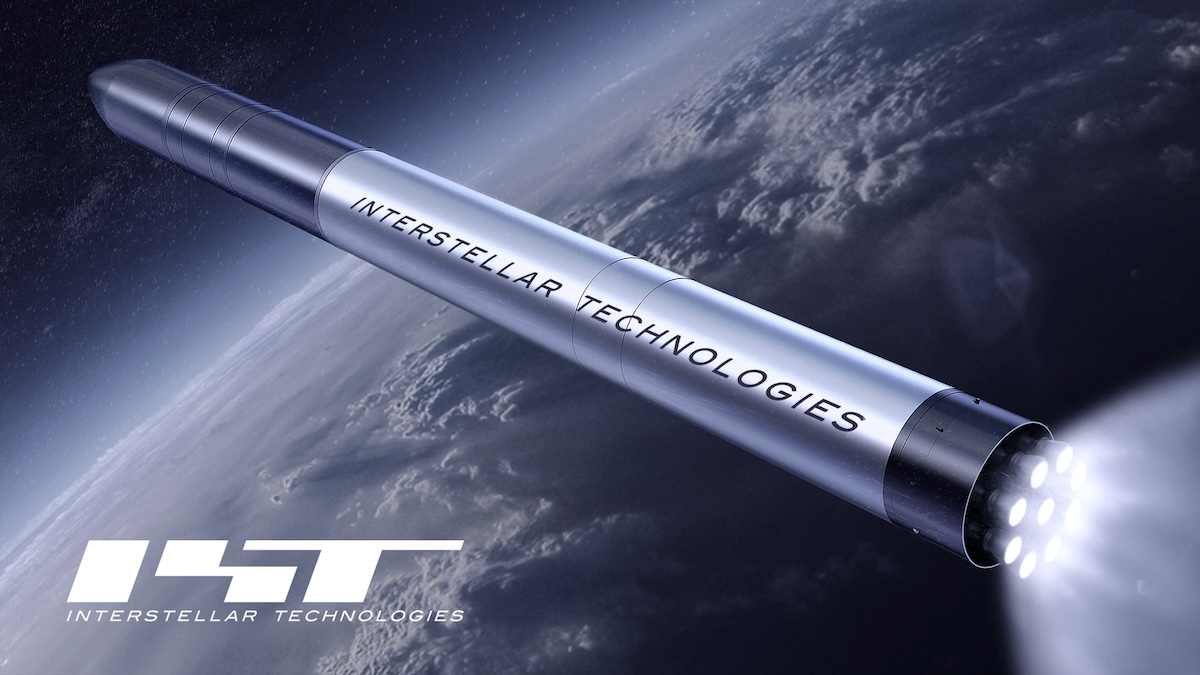

Woven by Toyota, a research division of Japanese carmaker Toyota, is pouring millions into Interstellar Technologies. This Japanese space company wants to reduce the cost of space travel by betting on mass production of rockets.
Interstellar Technologies is a Japanese company that emerged from an organisation of space enthusiasts set up in 1997. This organisation led to the creation of Natsu no Rocket-dan, the forerunner of Interstellar Technologies, in 2005. Natsu no Rocket-dan focused on private space development. The group launched its first rocket from its base in Taiki on the Japanese island of Hokkaido in 2011. In 2013, Natsu no Rocket-dan changed its name to Interstellar Technologies.
Over the years, several rockets have been launched by Interstellar Technologies. The first launch took place on 30 July 2017, although it was unsuccessful. At the time, it was the MOMO F1. Interstellar Technologies finally managed to successfully reach space for the first time in 2019 with a modified version of this rocket - the MOMO F3. The company was also successful with MOMO F6 and MOMO F7; both rockets reached space in 2021.
ZERO and DECA
It is currently working on two new launch vehicles: ZERO and DECA. Zero is aimed at launching small satellites into orbit. In this, the maximum payload is 800 kg that can be launched to an altitude of up to 550 kilometres. By comparison, MOMO reaches a maximum altitude of 100 kilometres, which is also called the Kármán line and is considered the limit of space. ZERO's first launch is scheduled for 2025.
In addition, Interstellar Technologies is thus working on DECA. This is a new launch vehicle announced in early 2023. DECA is bigger than ZERO and will allow it to launch larger satellites as well as carry payloads to the International Space Station (ISS). With the help of DECA, Interstellar Technologies also plans to establish its own satellite network. The launch of DECA is scheduled for after 2030.
Millions investment
So now Toyota is putting millions into the Japanese aerospace company via Woven by Toyoto. At stake is 7 billion Japanese Yen, or more than 43.2 million euros equivalent. The investment is part of an investment round led by Woven by Toyota. Interstellar Technologies expects to raise additional investments during this investment round.
Interstellar Technologies points to the growing demand for small rockets to launch satellites. Whereas there were 141 launches of such rockets in 2016, there will be 2,860 by 2023. The growth of the private space industry, growing emphasis on national security and the emergence of new applications such as satellite constellations are among the factors contributing to this trend, according to the company.
Launch more rockets from Japanese soil
At the same time, the company points to Japan's relatively small role in this development. By 2023, for instance, 116 launches took place in the United States and 63 in China, while the counter remained hovering at three in Japan. The Japanese government is also focusing on increasing Japan's share in this; it wants to be able to launch around 30 rockets on an annual basis by the early 2030s.
Achieving this goal, according to Instellar Technologies, requires a structural transformation of the domestic aerospace industry. In doing so, the focus should shift from one-off production to scalable manufacturing with a robust supply chain. Interstellar aims to leverage expertise from the automotive industry to transform rocket production into a cost-effective and scalable process. This includes Toyota's production methods.
No strangers
Toyota and Interstellar Technologies are no strangers to each other. The parties have been working together since 2020, exchanging personnel. For instance, 11 Toyota employees have been working for the space company for some time. Among other things, the parties work together on strengthening the supply chain and corporate governance.
Like the US SpaceX with Starlink, Interstellar wants to combine its knowledge in small rockets with expertise in satellite communications. It is working on satellite communications that allow direct connection to Earth-based devices such as smartphones. In this way, it wants to enable internet connectivity.
By comparison, SpaceX uses a constellation of thousands of small satellites orbiting in low earth orbit (LEO - Low Earth Orbit), at an altitude of about 340 to 1,200 kilometres above the earth. The satellites orbit in low Earth orbit, allowing them to communicate faster with ground stations and users. This results in lower latency than traditional satellite services, which is important for applications such as video conferencing, real-time data exchange and remote control of certain technology, among others.
Author: Wouter Hoeffnagel
Image: Interstellar Technologies










