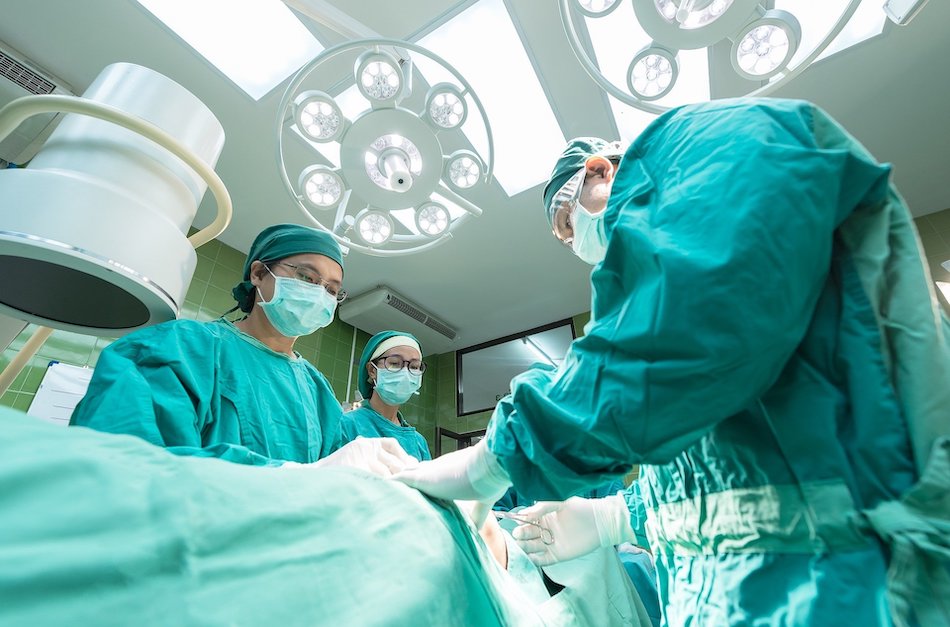

Scientists from TU Delft and Maasstad Hospital have produced an instrument opener from recycled waste from operating theatres. This specifically involves the polypropylene wrapping paper from operating theatres.
This reports researchers B. van Straten, D.R. van der Heiden, D. Robertson, C. Riekwel, F.W. Jansen, M. van der Elstad and T. Horeman. They do their story in the scientific journal Journal for Cleaner Production. Dutch hospitals use some 1.3 million kg of polypropylene wrapping paper to sterilise surgical instruments on an annual basis. In their study, the researchers sought a method for recycling this wrapping paper into new medical supplies.
Reducing CO2 emissions
The research helps achieve the government goal of reducing 55% of CO2 emissions from hospital care by 2030. Hospital care accounts for 7% of total CO2 emissions in the Netherlands. Among other things, the increasing use of disposable products in hospitals contributes to the rapidly growing amount of waste they produce. Burning this waste creates CO2 emissions.
"Since a hospital is considered an urban environment, recovering and recycling waste from operating theatre into raw materials is considered urban mining (Zhu and Xuan, 2014). From the perspective of urban agriculture, hospitals can be a good source for resource extraction. This since many resources used in hospitals are made of high-quality materials and are single-use objects," the researchers write in Journal for Cleaner Production.
Melting down wrapping paper
For the study, polypropylene wrapping paper from Maasstad Hospital was collected by recycling company Renewi. This material was remelted, granulated and mixed with new material. For this, they used various ratios and different temperatures.
The material produced by this process can be used for injection moulding of various medical devices. As an example, the researchers cite an instrument opener. This was recently officially registered. The device holds hinged instruments in an open position during the washing and disinfection process. This ensures that instruments are cleaned and disinfected better.
Breakthrough
TU Delft calls it a breakthrough that it has succeeded in making a new medical device that can be produced on a large scale from polypropylene waste. This also allows the hospital to be a supplier of a raw material for the manufacture of new (medical) devices. The hospital then uses these devices itself.
"It is fantastic that we have achieved this result together with the scientists from TU Delft. A promising step in the field of reducing medical waste," says Peter Langenbach, chairman of the Maasstad Hospital Executive Board.
Dog bones
Incidentally, the instrument opener is not the only medical device the researchers have produced. They also produced dog bones from the recycled material using injection moulding. This involved producing bones from different compositions for performing tensile tests.
The researchers see various benefits to their recycling method. For instance, they expect that this development could help tackle the scarcity of raw materials. It could also help combat the global problem of hospital waste. Further information on the research can be found in the *Journal for Cleaner Production*.
Author: Wouter Hoeffnagel










