Asparagus cultivation in Western Europe seems to have been saved by a Dutch high-tech startup. Cerescon has developed the world's first automatic selective asparagus harvester. It does as much in one harvest round as it would take 60 to 75 hand pickers three days to do.
Western European asparagus cultivation was running into certain limits. Manual harvesting was becoming more and more expensive due to mandatory higher wages, and finding seasonal workers was also becoming increasingly difficult. Several larger growers considered moving their farms to low-wage countries. Cerescon's asparagus harvester could solve many of these problems.
Cost
The robot was conceived by Ad Vermeer, whose brother was an asparagus grower and also ran into the above problems. There were already asparagus harvesting machines on the market, but they were all unable to find the asparagus to be staked. "One moment, the machine skips over deliciously tender asparagus tips, only to plunge full force onto an unsuspecting white pebble the next," reads the Cerescon website.
Human asparagus pickers can see the tops sticking out above the ground, but by then the asparagus is actually worth less. Cerescon's goal, therefore, was to develop a machine that can detect the asparagus to be harvested already below ground. The company called in several asparagus growers from Brabant, Limburg and Germany to jointly think about the best solution.

Right touch sensor
Ultra-thin rods equipped with a touch sensor were tested. It worked but the light tapping of the rods slightly damaged the asparagus. The sand bed also did not remain completely unscathed. Vermeer found the solution by replacing the touch sensor with one that detects water, the main component of an asparagus.
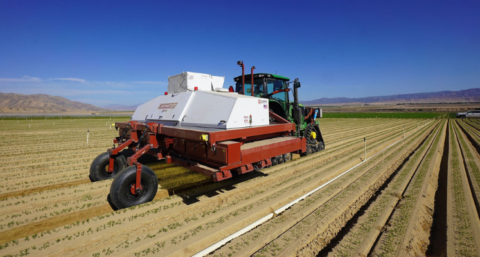
The Cerescon asparagus harvesting machine consists of a sensing section that detects asparagus underground, a robot that removes the asparagus from the ground and a sand bed restoring section. The machine is equipped with a patented detection method based on sensor technology. This detects asparagus underground before the white gold rises above ground and discolours. The robot cuts the asparagus underground and places it in a container. Immediately after cutting, the sand bed is restored to keep the quality of the asparagus constant throughout the season.
The machine has a capacity of 40 hectares, working three rows at a time, replacing sixty to seventy-five hand-pickers. According to Vermeer, the selective harvester is the beginning of a new era in agriculture and horticulture. "Low-value seasonal labour is going to be replaced by high-value jobs, and apart from asparagus, there are many other crops that need to be harvested selectively. There are still lots of opportunities for crossovers in high tech and agro."
In practice
This season, Cerescon is starting a three-year study in collaboration with Wageningen University and Research (WUR) to measure and compare the performance of the automatic asparagus harvester in terms of both quantity and quality with manual harvesting. To this end, trial fields have been set up at three locations in Limburg. In autumn, crop regrowth will be assessed to determine the impact of the harvesting method on yields in subsequent years.
The machine will cost €500,000 to €600,000 and the payback period is estimated at three seasons. The first machines will be sold on a project basis in the first quarter of 2018.
By: Kelly Bakker
Source photos: Cerescon